Raw milk for looksmaxxing comes down to bone. Unheated whole milk delivers lactoferrin in its native form, a milk protein that switches on bone-building cells and holds back bone-removing ones, together with myo-inositol, which lengthened the lower jaw in growing animals, plus the protein, fat and minerals a skeleton is built from. This article covers what each component does for the jaw, bone density and skin, what heat changes, and the case Aajonus Vonderplanitz put to Congress in his 2007 raw milk petition.
Landmarks
- Lactoferrin
- An iron-binding milk protein, concentrated in colostrum, that also acts as a growth factor for bone cells.
- Myo-inositol
- A sugar alcohol present in milk and many foods, needed by bone-forming cells and linked to mandibular cartilage growth.
- Osteoblast / osteoclast
- Osteoblasts lay down new bone. Osteoclasts remove it. Bone shape is the balance between the two.
- Mandibular condyle
- The rounded top of the lower jaw at the jaw joint, and its main growth site. It grows through cartilage.
- L. reuteriLactobacillus reuteri
- A lactic acid bacterium native to the human gut and breast milk, found in raw and fermented milks, studied for testosterone, oxytocin and bone.
- IGF-1
- Insulin-like growth factor 1, a hormone that drives bone and tissue growth, especially during puberty.
- Pasteurization
- Heating milk to kill microbes. Standard HTST pasteurization is 72 °C (161 °F) for 15 seconds; UHT goes much hotter.
Key points
- Lactoferrin increases osteoblast activity and bone formation in vivo (PMID 15166119) and reduces osteoclast formation (PMID 12163011).
- Dietary myo-inositol specifically increased mandibular growth in growing mice (PMID 30682567) and rabbits (PMID 38534273).
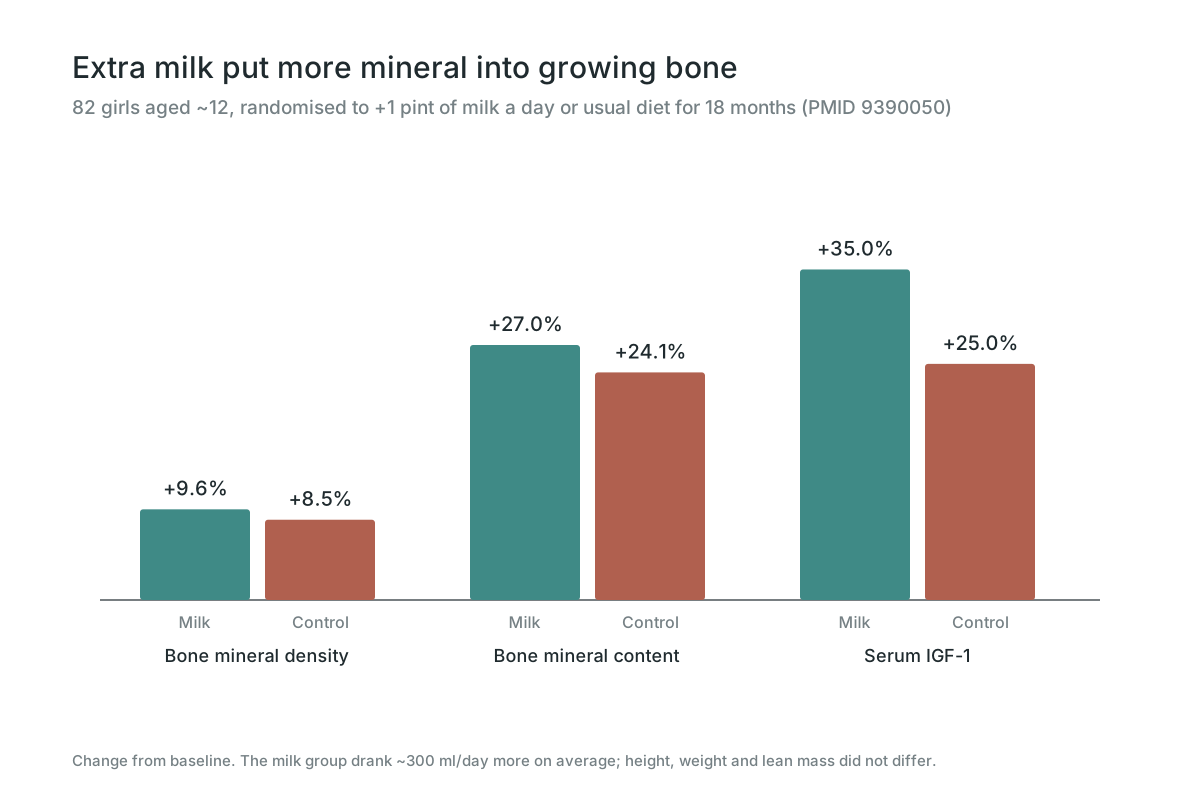
- An extra ~300 ml of milk a day for 18 months: bone mineral content +27.0% vs +24.1%, IGF-1 +35% vs +25% in teenage girls (PMID 9390050).
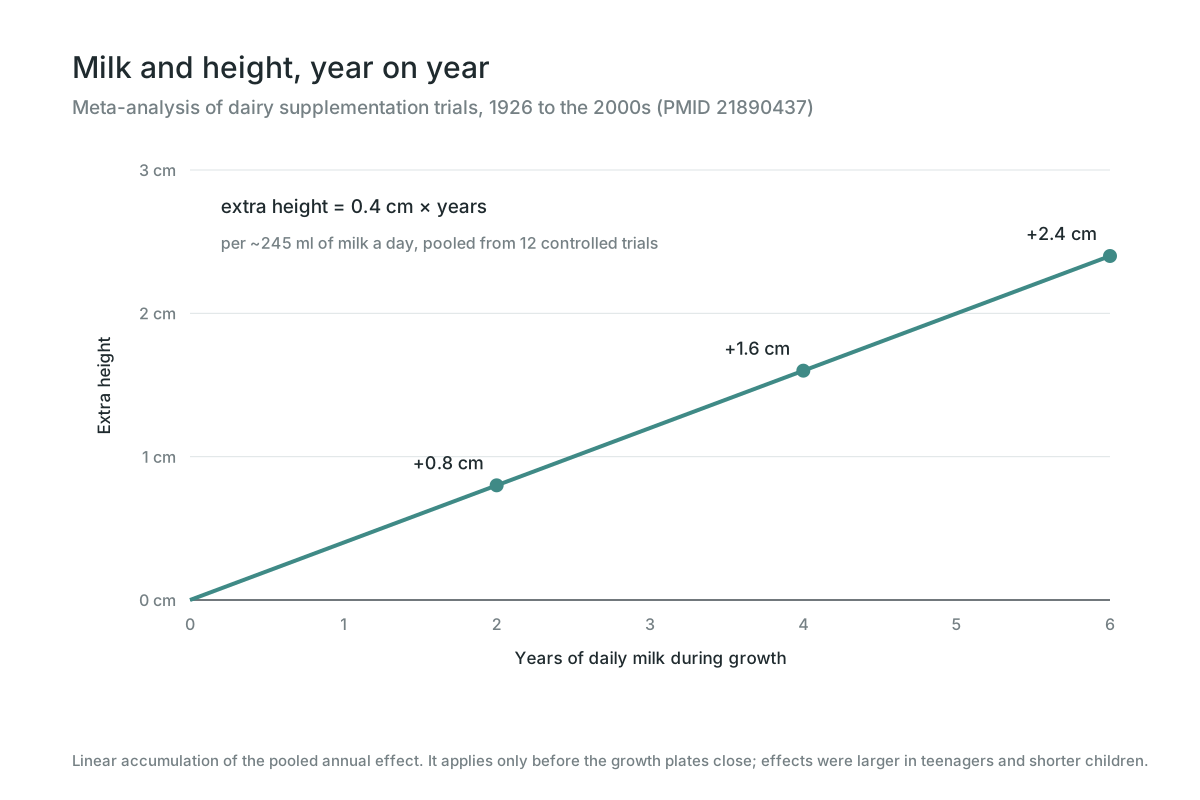
- Dairy supplementation adds about 0.4 cm of height per year per ~245 ml of milk a day, most in teenagers (PMID 21890437).
- Casein phosphopeptides from milk protein remineralise early enamel lesions (PMID 12598550).
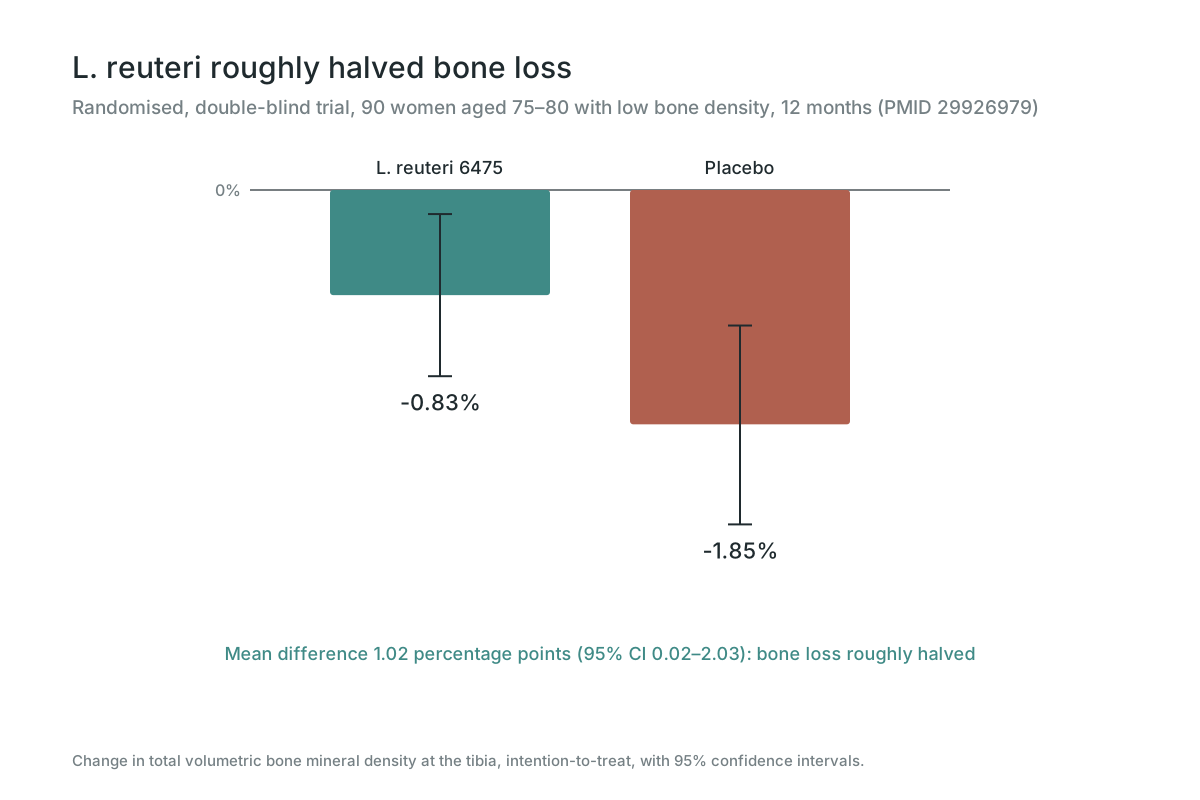
- L. reuteri, found in fermented raw milk, raised testosterone and testicle size in ageing mice (PMID 24392159) and halved bone loss in older women (PMID 29926979).
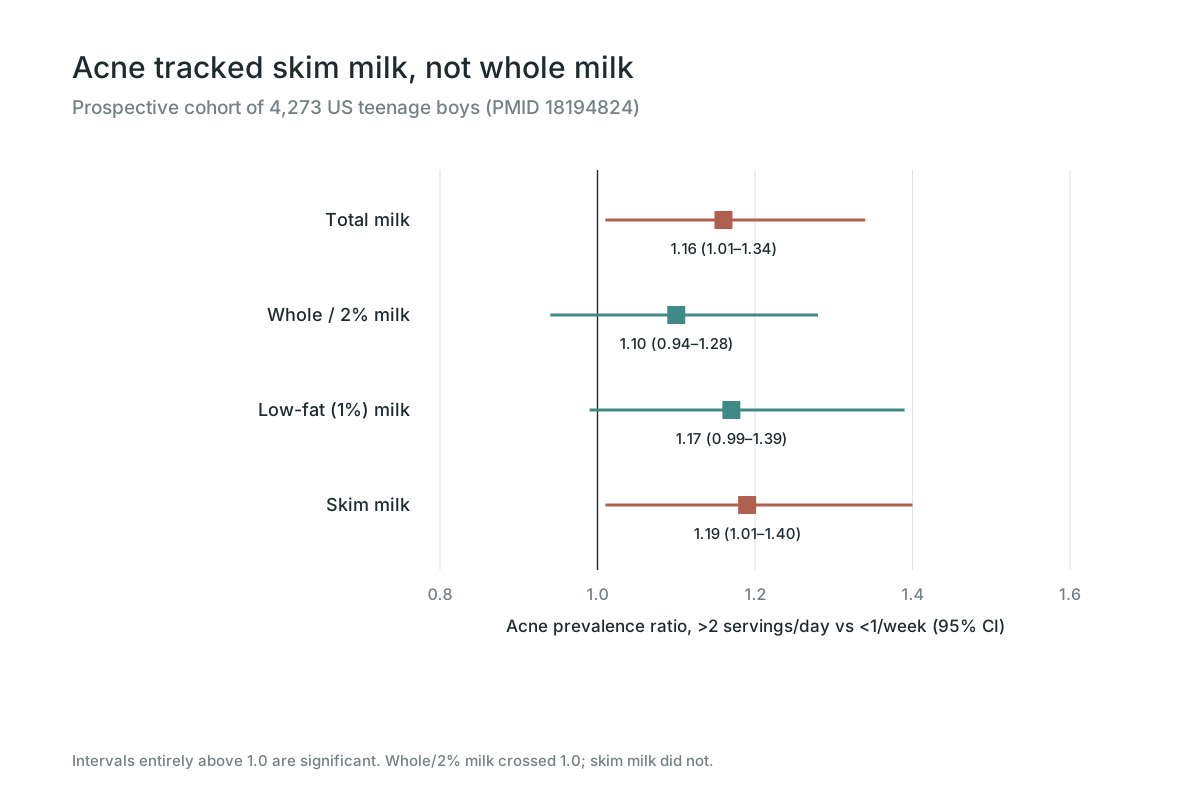
- Acne was significantly associated with skim milk, not whole or 2% milk, in 4,273 teenage boys (PMID 18194824).
- Heat denatures lactoferrin (PMID 25958286, PMID 33300486); raw milk keeps it native.
Is raw milk good for looksmaxxing?
Yes, for bone. The looksmaxxing traits people chase, a wide jaw, a defined chin, strong cheekbones, forward facial growth, are bone. Raw whole milk carries three things bone depends on at once: native lactoferrin that signals bone cells to build, myo-inositol linked to jaw cartilage growth, and the protein, fat, calcium and phosphorus that bone is made from.
The strongest effects fall during growth, when the jaw is still lengthening at the condyle. After growth, bone keeps remodelling throughout life, which is where lactoferrin's effect on the building-versus-removal balance still matters. The adult side of facial change is covered in how to improve dimorphism.
+27.0%
Bone mineral gain with extra milk, vs +24.1%
+35%
IGF-1 rise with extra milk, vs +25%
1.19×
Acne prevalence, skim milk (whole: n.s.)
Raw milk and the jawline: lactoferrin builds bone
Lactoferrin is best known as an antimicrobial protein, but bone cells respond to it directly. Cornish and colleagues found it to be a potent regulator of bone cell activity: it increased osteoblast proliferation and differentiation in culture and increased bone formation when given locally in mice (PMID 15166119). The same group described it as a novel bone growth factor (PMID 16012127).
It works on both sides of the balance. Lactoferrin reduced osteoclast differentiation and resorbing activity in vitro (PMID 12163011), and it stimulates osteoblast differentiation through the PKA and p38 signalling pathways (PMID 24877241). More building and less removal is the direction you want for a denser, better-defined jaw and chin.
The full cell biology, including RUNX2, Osterix and the RANKL pathway, is in lactoferrin, myo-inositol and osteogenesis.
Raw milk and jaw growth: myo-inositol
Milk also carries myo-inositol, and bone formation needs it. When the myo-inositol transporter SMIT1 was knocked out in mice, skeletal mineralisation was delayed and bone formation impaired (PMID 20818642).
The jaw result is the striking one. In growing mice, nutritional myo-inositol specifically increased mandibular endochondral growth, with a longer lower jaw and thicker condylar cartilage (PMID 30682567). A 2024 rabbit study repeated it, again with extra mandibular growth and no matching increase in thigh-bone growth (PMID 38534273). The lower jaw grows from a secondary cartilage at the condyle that behaves differently from limb growth plates, which may explain why the effect was jaw-specific.
These are growing animals, so the result speaks most to the teenage years, when the lower jaw does most of its forward and downward growth.
Milk and bone density: the randomised trial
The best human trial on milk and growing bone is Cadogan's in Sheffield. Eighty-two girls aged about 12 were randomised to a pint (568 ml) of whole or reduced-fat milk a day or to their normal diet, for 18 months. The milk group drank about 300 ml a day more on average. Their bone mineral density rose 9.6% vs 8.5% and bone mineral content 27.0% vs 24.1%, and serum IGF-1 rose 35% vs 25% (PMID 9390050).
Height, weight and lean mass did not differ between groups, so the extra went into the skeleton itself. The trial used ordinary milk; raw milk supplies the same protein and minerals with its lactoferrin in native form.
| Outcome over 18 months | Extra milk | Control |
|---|---|---|
| Bone mineral density | +9.6% | +8.5% |
| Bone mineral content | +27.0% | +24.1% |
| Serum IGF-1 | +35% | +25% |
| Height | No difference | No difference |
Does raw milk make you taller?
Height is the other half of the frame, and milk has the best evidence of any single food. A meta-analysis of 12 controlled trials, run from 1926 to the 2000s across Europe, the USA, China, Vietnam, Kenya, Indonesia and India, found the most likely effect of dairy supplementation to be 0.4 cm of extra growth per year for about 245 ml of milk a day. Milk had more effect than other dairy products, and the effect was larger in teenagers and in shorter children (PMID 21890437).
The mechanism runs through IGF-1. A review of milk and linear growth concluded that milk raises circulating IGF-1 and that at least part of its growth effect comes through the IGF axis, even in well-fed children (PMID 16848703). The Sheffield trial measured the same rise: IGF-1 up 35% with extra milk against 25% without (PMID 9390050).
Over the teenage growth years, 0.4 cm a year adds up to a couple of centimetres. Growth stops when the growth plates close, so this only applies before then.
0.4 cm
Extra growth per year per ~245 ml of milk daily
12 trials
Pooled in the height meta-analysis
Raw milk for skin: whole beats skim
The acne research is where milk gets its bad name, and the detail matters. In 4,273 teenage boys followed at Harvard, acne was significantly associated with skim milk (prevalence ratio 1.19, 95% CI 1.01 to 1.40) but not with whole or 2% milk (1.10, 0.94 to 1.28) (PMID 18194824). The authors suggested skim milk carries hormonal factors in amounts large enough to act.
For looksmaxxing, that points to the Aajonus approach: whole, full-fat milk rather than skimmed or low-fat products. Aajonus considered the raw cream the most calming and protective part of milk, and never recommended removing it.
Raw milk and teeth: the smile side of looksmaxxing
Teeth are part of the face you show. Milk's main protein, casein, contains phosphopeptides that bind calcium and phosphate and hold them at the tooth surface. In randomised, double-blind trials, casein phosphopeptide-calcium phosphate complexes delivered in a mouthrinse or sugar-free gum were retained in dental plaque and remineralised early enamel lesions better than other forms of calcium (PMID 12598550).
The petition Aajonus co-wrote gathered older observations on teeth: a 1937 *Lancet* report that children's teeth decayed less on a diet supplemented with raw milk than with pasteurized milk, and Dr. Evelyn Sprawson of the London Hospital reporting that children raised on raw milk in certain institutions had perfect teeth and no decay. Weston Price's field work, cited in the same report, linked traditional unprocessed diets, raw dairy among them, to broad dental arches and well-developed faces.
L. reuteri: fermented raw milk, testosterone and oxytocin
Fermenting raw milk adds a second layer: live lactic acid bacteria. One of the most studied is *Lactobacillus reuteri* (now *Limosilactobacillus reuteri*), a species that lives naturally in the human gut and in breast milk. Lactobacilli including *L. reuteri* have been isolated directly from raw cow's milk and from traditional fermented milks (PMID 21318359). Pasteurization kills them, which is why the fermented raw milks of pastoral cultures, from Tibetan and Mongolian yak and cow milk ferments to kefir, are the traditional food source of live lactobacilli.
Testosterone and testicle size. At MIT, Poutahidis and Erdman's group found that ageing male mice drinking *L. reuteri* originally isolated from human milk had larger testicles and higher serum testosterone than matched controls, with more Leydig cells (the cells that make testosterone), larger seminiferous tubules and more sperm production. Blocking the inflammatory signal IL-17A reproduced the effect, pointing to lowered inflammation as the route (PMID 24392159).
Oxytocin. The same group showed that *L. reuteri* raises the body's own oxytocin through the vagus nerve and halved wound-healing time in mice (PMID 24205344). A follow-up extended the wound-repair benefit to human subjects, and found that even a sterile lysate of the bacterium raised oxytocin, increased oxytocin-producing cells in the hypothalamus and lowered the stress hormone corticosterone in mice (PMID 27825953). Oxytocin is the bonding hormone; lower stress hormones matter for skin and facial puffiness too.
Oxytocin to testosterone to DHT. The two findings connect. Leydig cells carry their own oxytocin receptors, and oxytocin raised their basal testosterone output in a dose-dependent way, an effect blocked by an oxytocin-receptor antagonist (PMID 7632835). Testosterone is in turn the precursor of DHT, converted by the enzyme 5α-reductase in skin, hair follicles and other tissues. DHT is the androgen behind much of male facial and body hair and adult facial masculinisation.
Thyroid. The MIT group also reported that *L. reuteri* kept thyroid gland activity at youthful levels in ageing mice (Varian et al., *Journal of Obesity & Weight Loss Therapy*, 2014). The thyroid sets metabolic rate, which shows up in body fat and facial leanness.
Bone, in humans. The strongest human evidence ties straight back to looks. In a randomised, double-blind trial of 90 women aged 75 to 80 with low bone density, a daily dose of *L. reuteri* ATCC PTA 6475 roughly halved bone loss at the shin over 12 months: −0.83% vs −1.85% with placebo (PMID 29926979).
These results come from specific purified strains, mostly given in drinking water or capsules at around 10 billion bacteria a day, and the testosterone, oxytocin and thyroid findings are in mice. A raw milk ferment carries its own mix of strains.
−0.83%
Bone loss with L. reuteri over 12 months (placebo −1.85%)
2×
Faster wound healing via oxytocin in mice
Raw milk nutrition per glass
A 240 ml glass of whole cow's milk gives roughly the values below. They are typical figures for whole milk; raw milk varies with breed, season and diet, and grass-fed milk shifts with pasture. What heat changes is not these totals but the state of the proteins and enzymes, covered in the raw vs pasteurized section.
| Per 240 ml whole milk | Approximate amount | Why it matters for looks |
|---|---|---|
| Energy | ~150 kcal | Fuel for growth |
| Protein (casein + whey) | ~8 g | Bone matrix, muscle, lactoferrin |
| Fat | ~8 g | Carries vitamins A, D, E, K |
| Calcium | ~275–300 mg | Bone mineral |
| Phosphorus | ~200 mg | Bone mineral with calcium |
| Lactose | ~12 g | Milk sugar |
Cow vs goat vs camel raw milk
All three contain lactoferrin, and the amount varies by species, breed, season and stage of lactation. Cow's milk is the most available and the one most human trials used. Goat's milk is often chosen for digestibility. Camel's milk is the one measured most closely for lactoferrin.
In raw camel's milk from Kazakhstan, lactoferrin averaged 0.229 mg/mL, highest in spring. In the first week after birth it ran from 1.422 down to 0.586 mg/mL, several times higher (PMID 17183073). That is the general rule for every species: colostrum, the first milk, is the most concentrated source of lactoferrin, and it falls as lactation settles.
0.229 mg/mL
Lactoferrin, raw camel milk (mean)
1.42 mg/mL
Lactoferrin, camel milk in the first week
Raw vs pasteurized milk for looksmaxxing
Heat changes milk's working proteins. Lactoferrin is a folded, iron-binding protein, and thermal studies show heat-dependent denaturation that rises with temperature and time (PMID 25958286). A study of pasteurization found bioactive whey proteins, lactoferrin among them, partly denatured, with changes to their effect on immune cells (PMID 33300486). UHT milk, heated far above standard pasteurization, changes more.
The enzyme alkaline phosphatase is the clearest marker. Pasteurization inactivates it, and regulators test for it: if it is gone, the milk counts as pasteurized. Aajonus and Dr. Douglass held that this enzyme helps calcium absorption, which would make its loss a nutritional loss, not only a lab marker.
| Raw whole milk | Pasteurized | UHT / skim | |
|---|---|---|---|
| Lactoferrin | Native | Partly denatured | Largely denatured (UHT) |
| Alkaline phosphatase | Active | Inactivated | Inactivated |
| Myo-inositol, minerals, protein | Present | Present | Present |
| Milk fat | Whole | Whole or reduced | Removed (skim) |
| Acne association | Not significant (whole) | Not significant (whole) | Significant (skim) |
What Aajonus's raw milk petition showed
In June 2007, Aajonus Vonderplanitz and Dr. William Campbell Douglass sent every US Senator and Representative a 58-page Petition and Report in Favor of Natural Milk (read the original). It asked Congress to allow raw milk to be sold across state lines, which the FDA has banned since 1987, and compiled nearly a century of research on raw versus pasteurized milk to support it.
Its core argument is about method: illness gets linked to raw milk through questionnaires, not by testing the milk. Its 1945 figures give one milk-borne case per 12.4 million quarts of pasteurized milk and one per 18.9 million quarts of raw, about 80.6 vs 52.9 cases per billion quarts. It documented raw milk used as treatment by physicians such as Dr. J. E. Crewe of the Mayo Foundation, and older feeding studies, including Pottenger's cats and Wulzen's guinea pigs, where animals did worse on heated milk.
It also pointed to the largest milk outbreak in US history, which was pasteurized: Illinois, 1985, one plant's 2% milk, over 16,000 confirmed salmonella cases and up to 197,581 people estimated ill (PMID 3316720).
California is where the argument won. After Douglass and Vonderplanitz rebutted a Los Angeles County health department report in 2001, legislators allowed raw milk to be sold in stores under the same Grade A rules as other milk, which is still the case there. The federal interstate ban (21 CFR 1240.61) remains.
Aajonus also held that bacteria that grow naturally in raw milk help the body clear accumulated toxins, and reported giving high-bacteria raw milk to volunteers from 1988 with only minor, short-lived reactions. That was his own experience and position, set out in the petition and his essay *What to Consider When Deciding to Drink Raw Whole Milk or Pasteurized Milk*.
Raw milk in Aajonus's primal diet
In Aajonus's Primal Diet, raw dairy sat alongside raw meat, raw eggs, raw fats and vegetable juices. He used raw whole milk, raw cream, unsalted raw butter and raw cheese, and treated the fat as the most valuable part: raw cream and butter, in his view, calmed and protected the nerves and helped the body bind and carry out toxins.
His reasoning on milk came from his own life. He described drinking up to half a gallon of pasteurized 2% milk a day as a sickly child who developed Type 1 diabetes, then recovering on raw juices and raw dairy after being given months to live, and relapsing each time he went back to pasteurized milk. That history is set out in the petition's credentials section.
Everything Aajonus wrote about raw milk, including the full petition, is searchable paragraph by paragraph on our research page.
How long does raw milk take to change your face?
Bone changes slowly. The Sheffield trial measured its bone gains over 18 months, and the height meta-analysis works in centimetres per year. Jaw growth at the condyle happens across the teenage years, so the window for the myo-inositol and IGF-1 effects is years, not weeks.
Skin is faster. Acne in the Harvard cohort tracked with what the boys had been drinking in the preceding years, and switching from skim to whole milk is a change you can make today.
In adults, raw milk won't regrow a jaw. It supports the constant remodelling bone goes through for life, with lactoferrin pushing the balance toward building. Adult facial change comes from bone remodelling, fat and posture together, covered in how to improve dimorphism.
How to use raw milk for looksmaxxing
Choose whole, not skim. The fat carries the fat-soluble vitamins, and the acne association sits with skim milk.
Choose grass-fed and a dairy you know. Aajonus's rule was a clean source you trust; the petition's standard was California's Grade A rules for raw milk.
Drink it daily during growth. The Sheffield trial's effect came from about 300 ml extra a day, sustained for 18 months. The jaw grows over years, so consistency matters more than amount.
Check the law where you live. US states range from retail sale to farm sales, herd shares or none; interstate sale is banned. The FDA and CDC advise against raw milk for pregnant women, young children, older adults and people with weakened immunity, so weigh that if it applies to you.
Frequently asked
For bone, yes. Raw milk carries native lactoferrin, which stimulates bone-building osteoblasts and suppresses bone-removing osteoclasts (PMIDs 15166119, 12163011), and myo-inositol, which increased lower-jaw growth in growing mice and rabbits (PMIDs 30682567, 38534273).