Carl Jung's shadow is the part of you that you don't want to look at. The anger you swallow. The envy you deny. The things you want but feel ashamed of. Jung said hiding it doesn't make it go away. It just controls you from underneath. Science now shows the same thing in your body. Holding feelings in puts your body in stress mode and raises your blood pressure. Over the years, it's linked to dying earlier. Naming the feeling, writing it down and sleeping on it calms your brain and even helps wounds heal faster.
Landmarks
- Shadow
- Jung's word for the parts of yourself you've pushed out of sight because they don't fit who you think you are.
- Persona
- The mask you show the world. Useful, but if you think the mask is all you are, the shadow grows behind it.
- Individuation
- Jung's name for becoming whole: bringing the shadow up, owning it and folding it into who you are.
- Amygdala
- The brain's alarm. It flags threats and fires up your stress response before you've had time to think.
- Stress mode
- Fight-or-flight: your heart speeds up, blood vessels tighten and adrenaline rises.
Key points
- Hiding your feelings put the heart into stress mode in 180 women watching emotional films (PMID 9103721).
- Rethinking a feeling lowered it, while hiding it only raised your body's stress response (PMID 9457784).
- People who always bottle things up had higher blood pressure, at rest and under pressure (PMID 2376846).
- People who bottled up the most had a 35% higher risk of dying over 12 years, and 70% higher from cancer (PMID 24119947).
- Naming a feeling calmed the amygdala, the brain's alarm (PMID 17576282).
- Writing about buried trauma boosted immune function (PMID 3372832) and made biopsy wounds heal faster (PMID 18230239).
- REM sleep took the charge out of yesterday's emotional memories overnight (PMID 22119526).
What did Carl Jung mean by the shadow?
"One does not become enlightened by imagining figures of light, but by making the darkness conscious." Carl Jung, The Philosophical Tree, 1945.
Jung split you into two parts: what you show and what you hide. The persona is the mask you show people. The shadow is everything you've decided isn't you: rage, jealousy, lust, weakness, even good traits you were taught to be ashamed of. Being nice doesn't get rid of it. You push it down, and it leaks out as bad moods, as blaming other people, and as reactions you can't explain.
His fix was to bring it into the light and own it. He called this individuation, which just means becoming whole. He loved an old alchemy picture of it: a king and a queen, the sun and the moon, joining hands. Two opposites have to come together before you become something new.
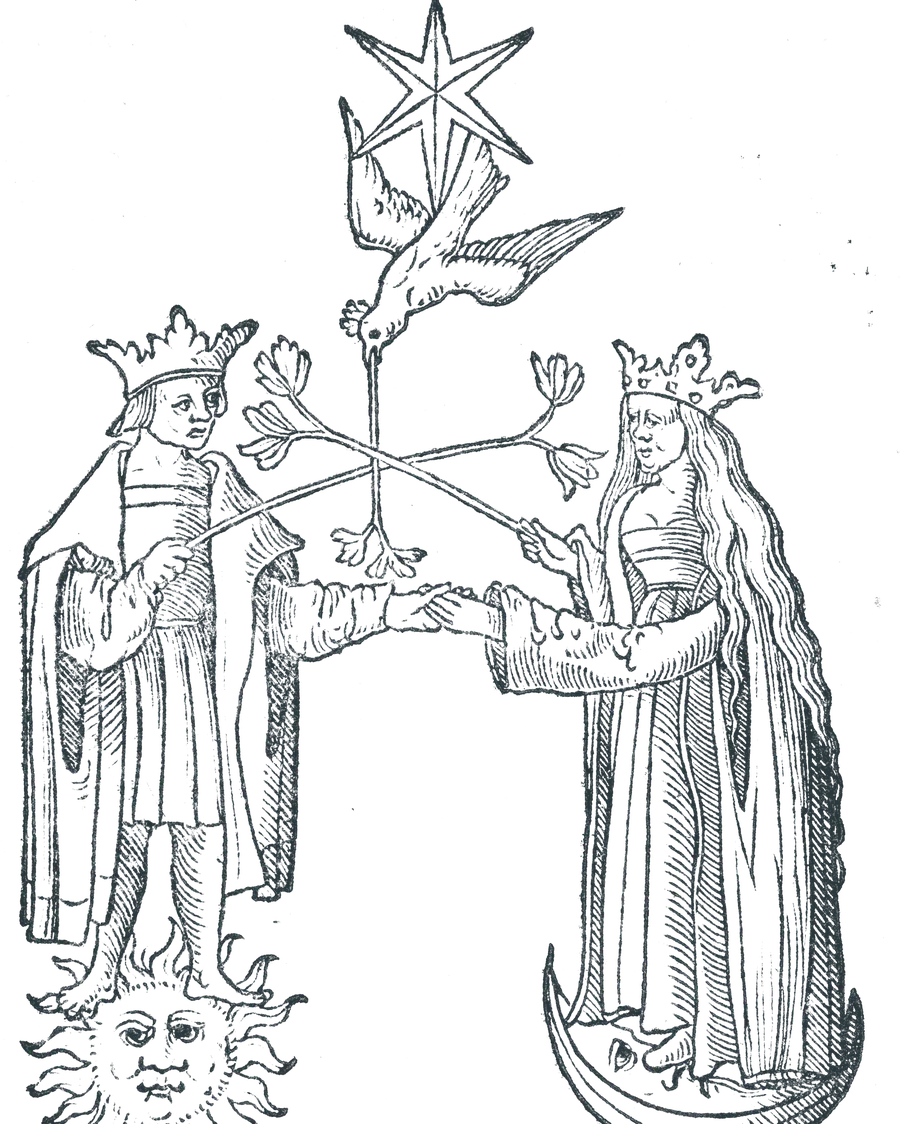
01 / 07 · Star
The goal. In Jung's reading, the whole self you only reach after the opposites are joined.
Coniunctio, Rosarium philosophorum, 1550 (Wellcome Collection, CC BY 4.0). Jung built a whole book on these woodcuts. Tap a part.
What happens in your brain when you name your shadow?
Jung started out doing lab tests. He read people a list of words and timed how fast they answered, while a machine measured their skin. When a word touched something they had buried, they hesitated and their skin reacted. Their body knew before they would admit it.
Brain scans show the flip side. When people looked at angry or scared faces and put a name to the feeling, their amygdala, the brain's alarm, calmed down. A part of the front of the brain switched on and acted like a brake. The harder it worked, the quieter the alarm got (PMID 17576282).
That's the whole case for shadow work in one scan. Naming it isn't weakness. It's literally the brake on your alarm system.
What does hiding your feelings do to your body?
In one experiment, 180 women watched sad, neutral and funny films. Half were told to hide what they felt. On the outside, it worked. On the inside, their heart went into stress mode, for sad and happy films alike (PMID 9103721).
In another test, people watched a disgusting film. Some were told to look at it differently, some to just keep a straight face. Looking at it differently made the feeling smaller. The straight face didn't change the feeling at all and raised their stress (PMID 9457784). The mask costs you, and you still feel it.
Make it a habit and it sticks. People who always bottle things up, who say they're fine but get defensive, had higher blood pressure at rest and bigger spikes under pressure than everyone else (PMID 2376846).
Core · the shadow
Edge · your body
01 / 06 · Shadow
What you won't look at
The anger, envy and wants you've decided aren't you.
The hidden self at the core, your body at the edge. Tap a ring to follow the chain.
Can suppressing emotions shorten your life?
In 1996, 729 Americans answered questions about how much they bottle up their feelings. Researchers followed them for 12 years. The biggest bottlers had a 35% higher risk of dying, and a 70% higher risk of dying from cancer (PMID 24119947).
That's the shadow's long game. A swallowed feeling is a small hit to your heart and stress system. Swallow thousands of them for decades and it adds up to years.
Does shadow work heal the body?
Psychologist James Pennebaker had students write for 20 minutes a day, four days in a row. Some wrote about their deepest traumas, the rest about everyday stuff. The trauma writers ended up with stronger immune cells and went to the doctor less (PMID 3372832).
Later, researchers gave 36 people a tiny skin wound after a similar writing task. The ones who wrote about trauma healed faster, with smaller wounds after two and three weeks (PMID 18230239). Getting the shadow onto paper literally helped their skin close.
What do dreams do with your shadow?
Jung treated dreams as letters from the unconscious, the shadow talking in pictures because you won't let it talk any other way. He had patients write them down and work with them.
Sleep science shows how. In REM sleep, the dreaming stage, your stress chemicals drop while your brain replays the day's emotions. People who got good REM sleep reacted less to the same upsetting pictures the next day (PMID 22119526). Researchers call it overnight therapy (PMID 19702380).
So cutting your sleep short doesn't just cost you T. It leaves yesterday's charge sitting in your alarm system.
What Aajonus said about suppressed emotions
Aajonus saw buried feelings like any other toxin: something the body has to clear. He wrote that chest problems like bronchitis get worse from suppressed emotions turned against one's self, because the tension in your chest burns up the fat that protects your airways.
He was a big believer in letting it out. To a man getting upset in a Q&A, he said crying transforms old toxic adrenaline into endorphins, which relax and heal the body. Asked about sadness, he said crying is good, singing is good.
He also said that as the body cleans out, old trauma comes up with it. He called it an emotional detox: stored chemicals from old trauma releasing, sometimes with the memory attached. His advice for getting through it was to cut out fruit and anything high in sugar so blood sugar swings don't add to the anxiety.
Feeding the brain that faces the shadow
Your brain is mostly fat, and your stress hormones are built from it. A brain running on seed oils and sugar has less to work with when the alarm fires. Aajonus was strict and we're stricter: every animal food raw.
Raw eggs, raw unsalted butter, raw cream and raw meat with its fat. Warm raw milk for calm (the case is in raw milk for looksmaxxing). Fruit kept low, especially during an emotional detox. No salt, no seed oils, no grains, no processed sugar, no supplements.
What happens when you start shadow work?
It usually gets louder before it gets quieter. The first few writing sessions in the Pennebaker studies made people feel worse in the short term, and the health benefits showed up in the weeks after. Expect the same: old anger, old grief, weird dreams.
Then it settles. You get triggered less by people who used to get under your skin, because you've stopped projecting your own stuff onto them. That steadiness is what people read as frame.
How to do shadow work, step by step
Name it, write it, sleep on it, let it out.
- Write for 20 minutes on four days in a row about the thing you least want to look at. Don't edit it. You can burn it after.
- When a feeling hits, name it out loud or in your head in one word: angry, jealous, ashamed. That's the amygdala brake.
- Notice who irritates you most. Jung said that's usually your own shadow on someone else's face. Write what you hate in them, then find it in yourself.
- Keep a notebook by the bed and write down dreams the second you wake, before you check your phone.
- Protect your sleep in a dark room so REM can do its overnight work.
- Cry when it comes. Don't hold your face straight to look tough.
- Eat raw fat daily: raw eggs, raw butter, raw cream, raw meat. Cut fruit and sugar while old stuff is coming up.
- Get sun on bare skin in the morning. It sets your sleep clock and your T. See sunlight for testosterone.
The shadow and your body, side by side
What was found, and the study behind each one.
| What | Finding | Source |
|---|---|---|
| Naming the feeling | The brain's alarm calms down | PMID 17576282 |
| Hiding the feeling | Heart goes into stress mode | PMID 9103721 |
| Rethinking vs hiding | Rethinking lowers the feeling, hiding raises stress | PMID 9457784 |
| Bottling it up | Higher blood pressure | PMID 2376846 |
| 12-year follow-up | 35% higher death risk in big suppressors | PMID 24119947 |
| Trauma writing | Stronger immune response, fewer clinic visits | PMID 3372832 |
| Wound healing | Smaller wounds at 14 and 21 days | PMID 18230239 |
| REM sleep | Less amygdala reaction the next day | PMID 22119526 |
Frequently asked
The parts of yourself you've pushed out of sight because they don't fit who you think you are: anger, envy, desire, weakness, even good traits you were taught to hide.