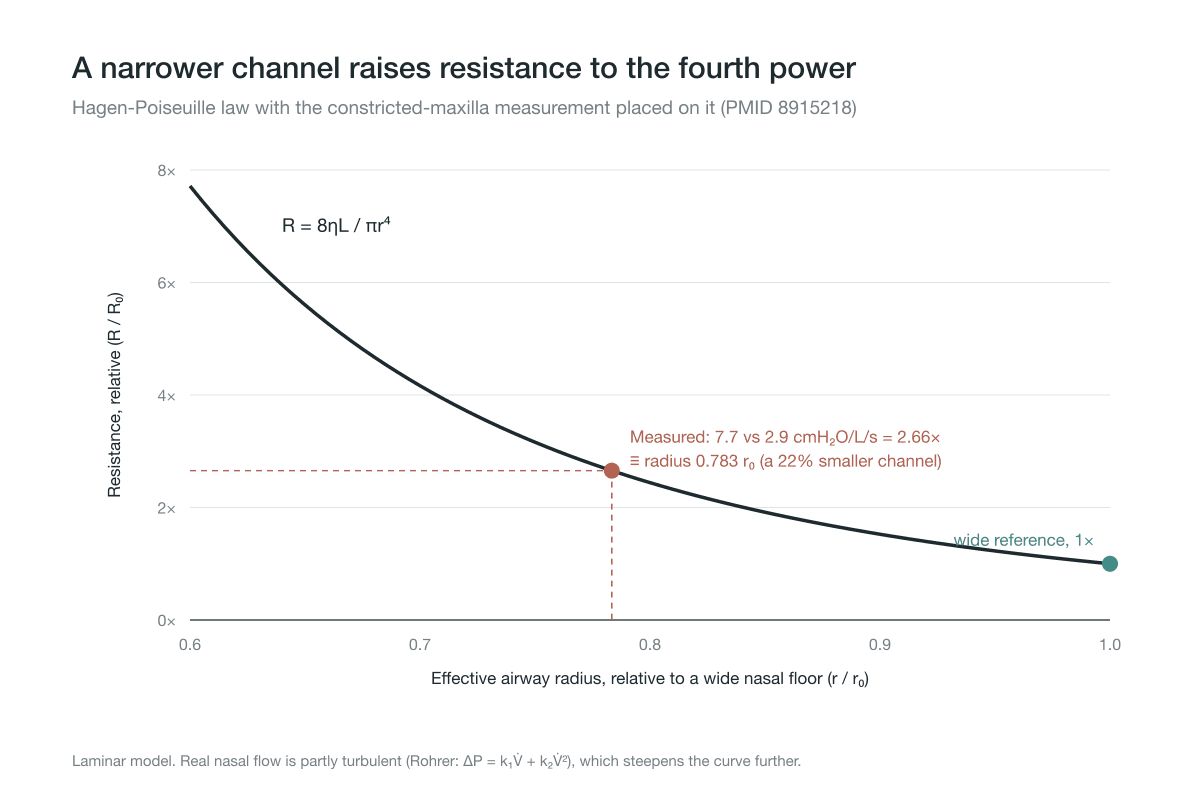
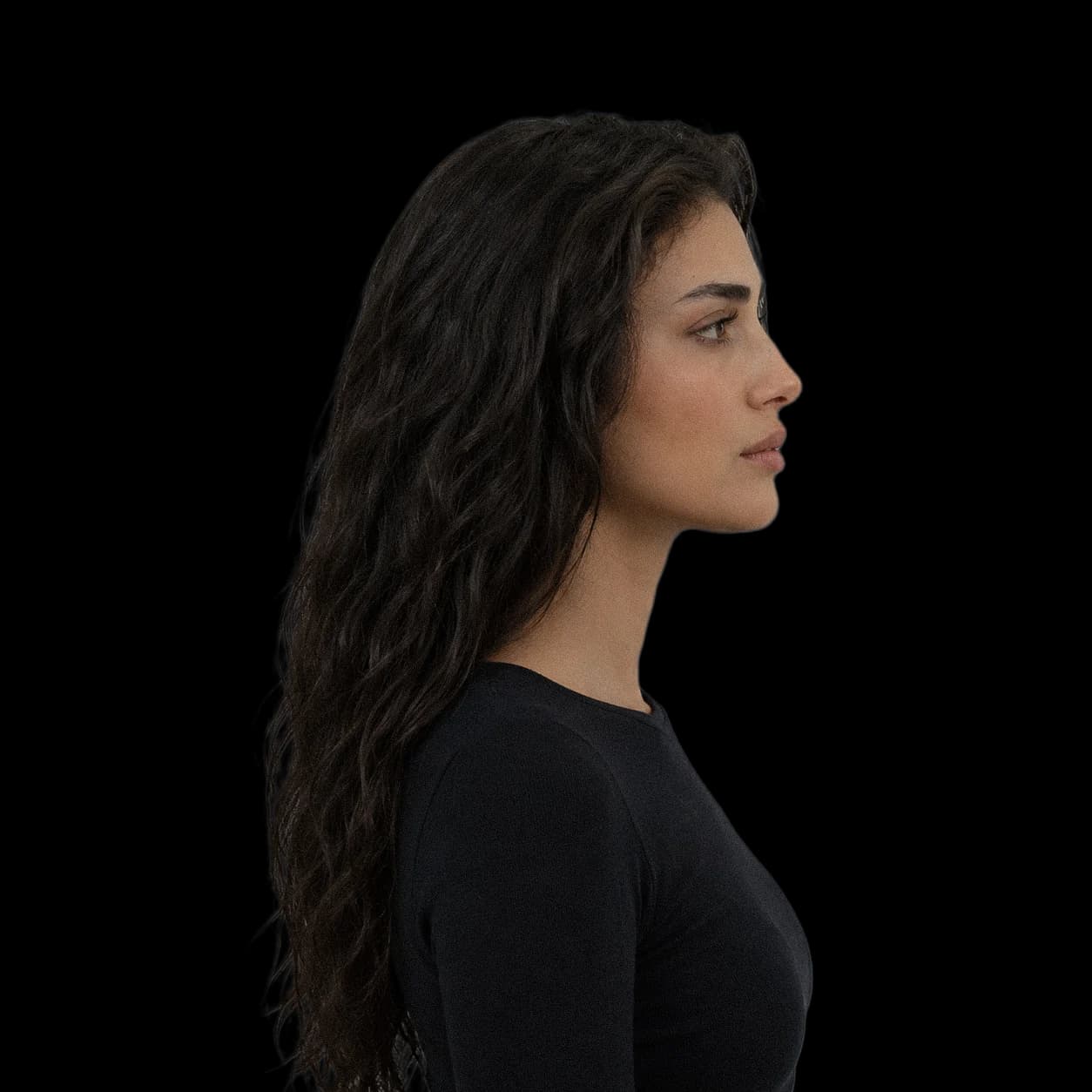
A mouth breathing face describes the facial pattern that develops when a child breathes through the mouth for long periods: lips apart at rest, a longer lower face, a jaw rotated down and back, and a narrow upper arch. In older literature it is called long face syndrome or adenoid facies. The face grows around its function, and breathing is the function it serves every minute of every day. This article covers what the experiments and meta-analyses measured, with the geometry and chemistry worked through.
Landmarks
- Long face syndrome
- A vertical facial pattern with increased lower face height, a steep mandibular plane and often lips apart at rest.
- SNA and SNB
- Cephalometric angles giving the forward position of the upper jaw (point A) and lower jaw (point B) relative to the skull base line sella-nasion.
- Mandibular plane angle
- The steepness of the lower border of the mandible relative to the skull base. Higher means a jaw rotated down and back.
- Lip incompetence
- Lips that do not close together at rest without muscle strain.
- Apnoea-hypopnoea indexAHI
- Breathing stops and partial reductions per hour of sleep. 30 or more is the severe range.
What is a mouth breathing face?
The recognisable features are a lips-apart resting posture, a long lower third of the face, a chin that sits back and down, a steep lower jaw border, and a narrow upper arch with a high-looking palate. Lip strain when closing, a flat or retruded midface and crowded teeth often come with it. None of these is a single diagnosis. Together they describe a growth direction.
Linder-Aronson's classic study of children with enlarged adenoids linked mode of breathing and nasal airflow to characteristics of the facial skeleton and the dentition (PMID 5272140). Tourne's review summarised the pattern: switching from nasal to oronasal breathing produces functional adaptations that include an increase in total anterior face height and vertical development of the lower anterior face (PMID 2202236).
What happens when only the breathing changes
The cleanest evidence comes from experiments where nothing but the airway was altered. Harvold's group placed silicone plugs in the noses of rhesus monkeys. The animals adapted differently, some holding the mouth open, some lowering the jaw, some pushing the tongue forward, but all experimental animals gradually acquired a facial appearance and dental occlusion different from those of the controls (PMID 6939331).
A follow-up in eight monkeys recorded the changes over two years of complete nasal obstruction. Anterior face height increased more than in controls, the occlusal and mandibular plane angles to the skull base increased, and anterior crossbites and malpositioned teeth appeared (PMID 6594052). That is the long face pattern, produced on demand.
Posture changes first. In human experiments, total nasal obstruction produced an extended head position in all cases, and when combined with visual deprivation the respiratory response dominated (PMID 6928735). Tilting the head back opens the airway behind the tongue. It also stretches the soft tissues of the face and neck, which is one proposed route by which a breathing habit becomes a skeletal shape.
What the meta-analyses measured in children
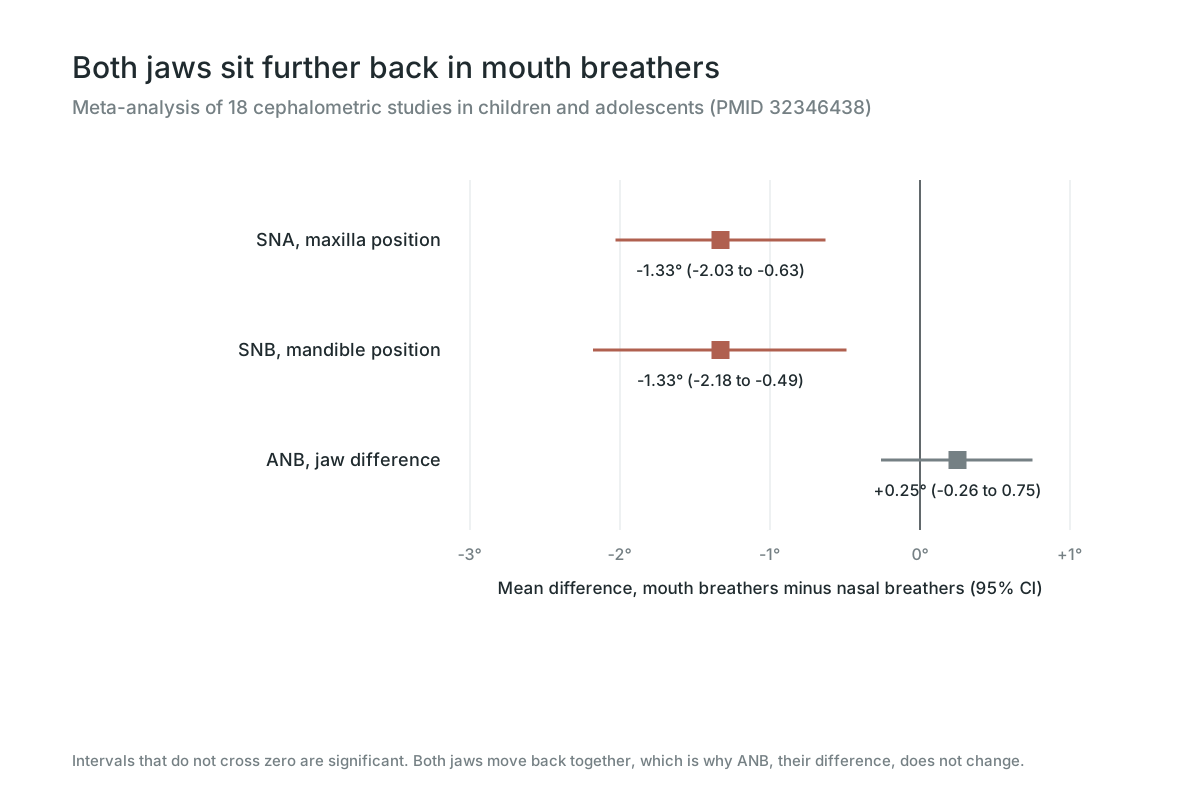
A meta-analysis of 18 cephalometric studies compared children and adolescents who breathe through the mouth with nasal breathers. SNA was lower by 1.33° (95% CI −2.03 to −0.63) and SNB by 1.33° (−2.18 to −0.49), so both jaws sat further back. Mouth breathers also had a larger mandibular plane angle, greater total and lower anterior face height, and shorter posterior face height (PMID 32346438). The authors described the result as a retrognathic maxilla and mandible with a vertical growth pattern and downward and backward rotation of the mandible.
The arch narrows too. A 2026 meta-analysis of 13 studies found significantly reduced upper intercanine and intermolar widths and lower intermolar width in mouth-breathing children, a deeper palate at the posterior teeth, and a higher frequency of posterior crossbite (PMID 42026531). In 84 eight-to-nine-year-olds, the children with an open-mouth posture had significantly greater anterior lower face height and a steeper occlusal-to-mandibular plane angle than those with competent lips (PMID 16417139). The narrow arch connects directly to the chain described in narrow maxilla vs wide maxilla.
−1.33°
SNA and SNB, mouth vs nasal breathers
18 studies
Pooled in the cephalometric meta-analysis
13 studies
Pooled in the arch-width meta-analysis
Turning degrees into millimetres
Angles in cephalometry look small, so it helps to convert them. An angle θ swept at radius r moves a point along an arc of length s = r·θ, with θ in radians. If point A sits about 60 mm from nasion, the 1.33° lower SNA is 60 × 0.0232 = 1.4 mm further back at the base of the upper jaw.
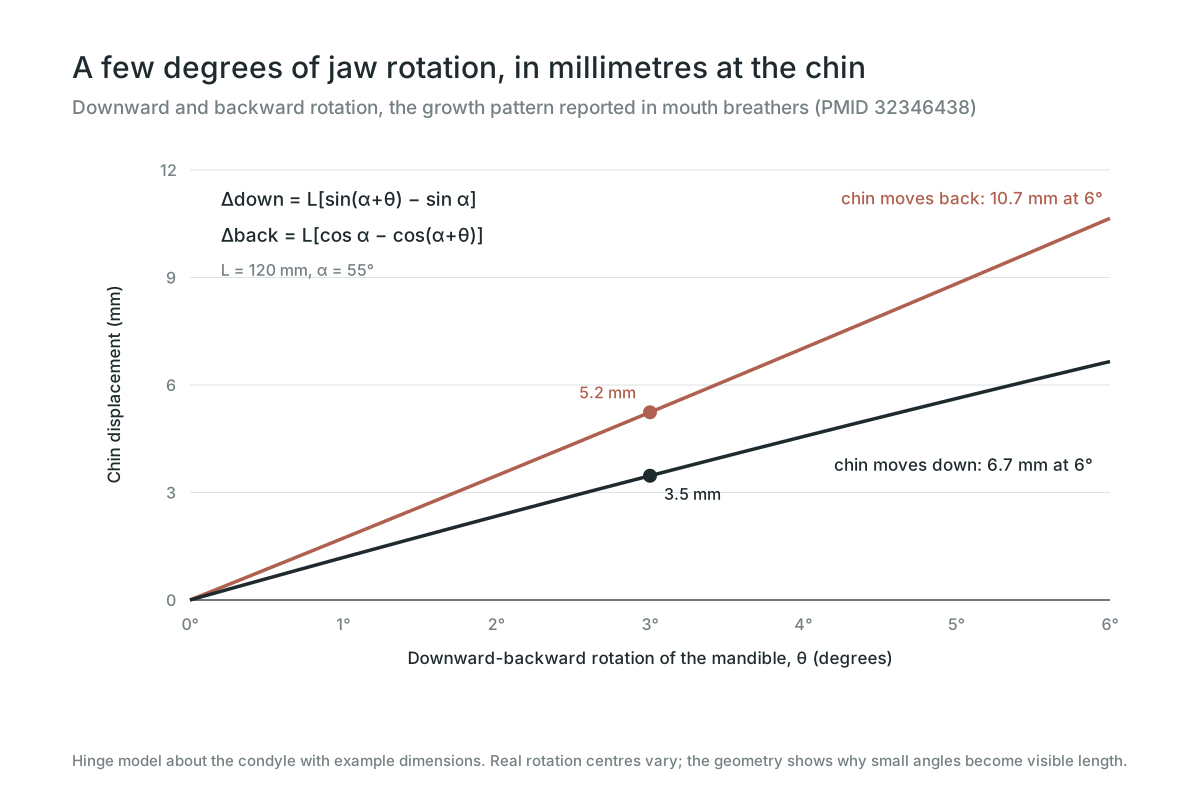
The lower jaw rotates about the condyles, so its effect grows with distance from the hinge. For a chin at L = 120 mm from the condyle and α = 55° below horizontal, rotating the mandible down and back by θ moves the chin Δdown = L[sin(α+θ) − sin α] and Δback = L[cos α − cos(α+θ)]. At θ = 3°, that is 3.5 mm down and 5.2 mm back. At 6°, it is 6.7 mm down and 10.7 mm back. A change nobody would notice as an angle becomes a visibly longer lower face and a weaker chin in profile.
Mouth breathing in sleep: the crossover experiment
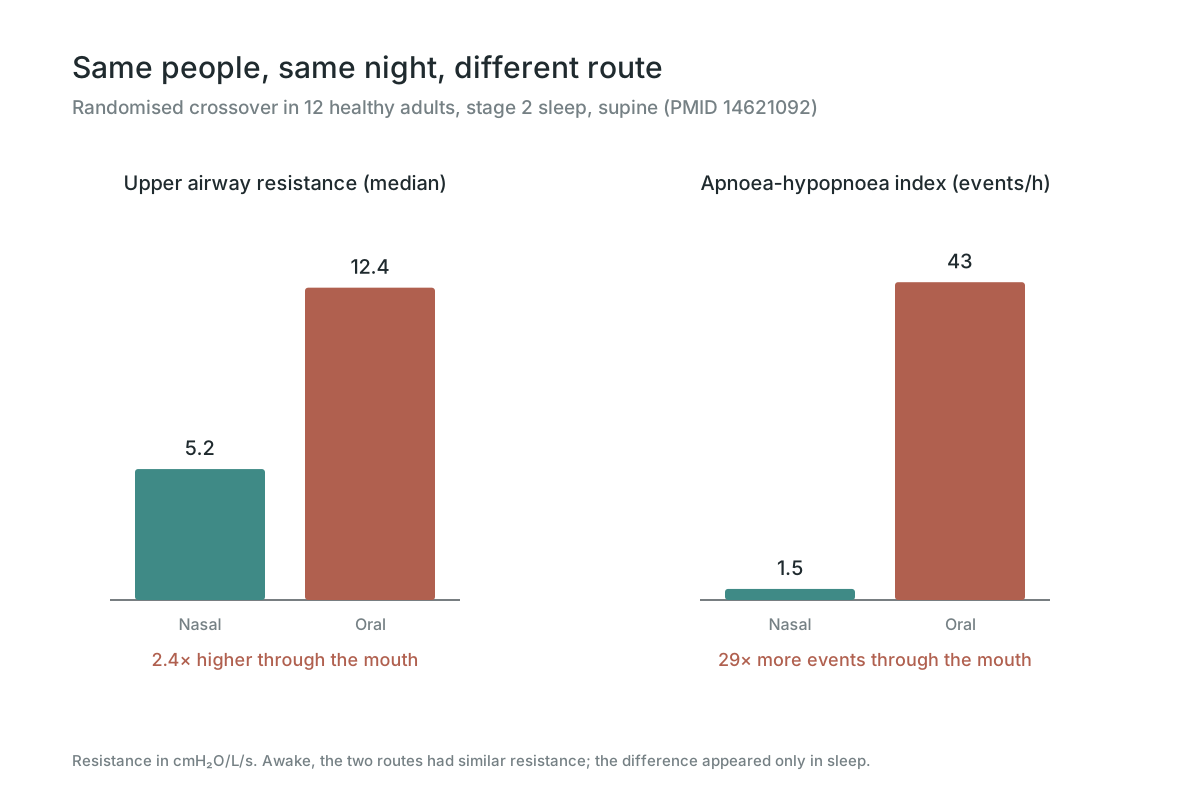
Fitzpatrick and colleagues randomised 12 healthy adults with normal nasal resistance to breathe through the nose or the mouth during sleep, single-blind and crossed over. Awake, resistance was similar by either route. Asleep, supine in stage 2, upper airway resistance was a median 12.4 cmH₂O/L/s through the mouth vs 5.2 through the nose, and the apnoea-hypopnoea index was 43 vs 1.5 (PMID 14621092).
An index of 43 is in the severe range, produced in people who were healthy sleepers through the nose. Over 8 hours it is about 344 events, one every 60 / 43 ≈ 1.4 minutes. The mechanism follows from the anatomy: opening the mouth drops the mandible and carries the tongue base backward into the airway behind it, and the soft walls of the pharynx collapse more easily. The consequences of that kind of fragmented, low-oxygen sleep for blood pressure, testosterone and attention are worked through in narrow maxilla vs wide maxilla.
What the mouth route removes and adds
Breathing through the mouth bypasses the paranasal sinuses, which produce nitric oxide at very high concentrations from an NO synthase in their epithelium (PMID 7585069). That NO normally travels to the lungs with nasal breathing. In healthy subjects, transcutaneous oxygen tension was 10% higher during nasal breathing than oral breathing (PMID 8971255).
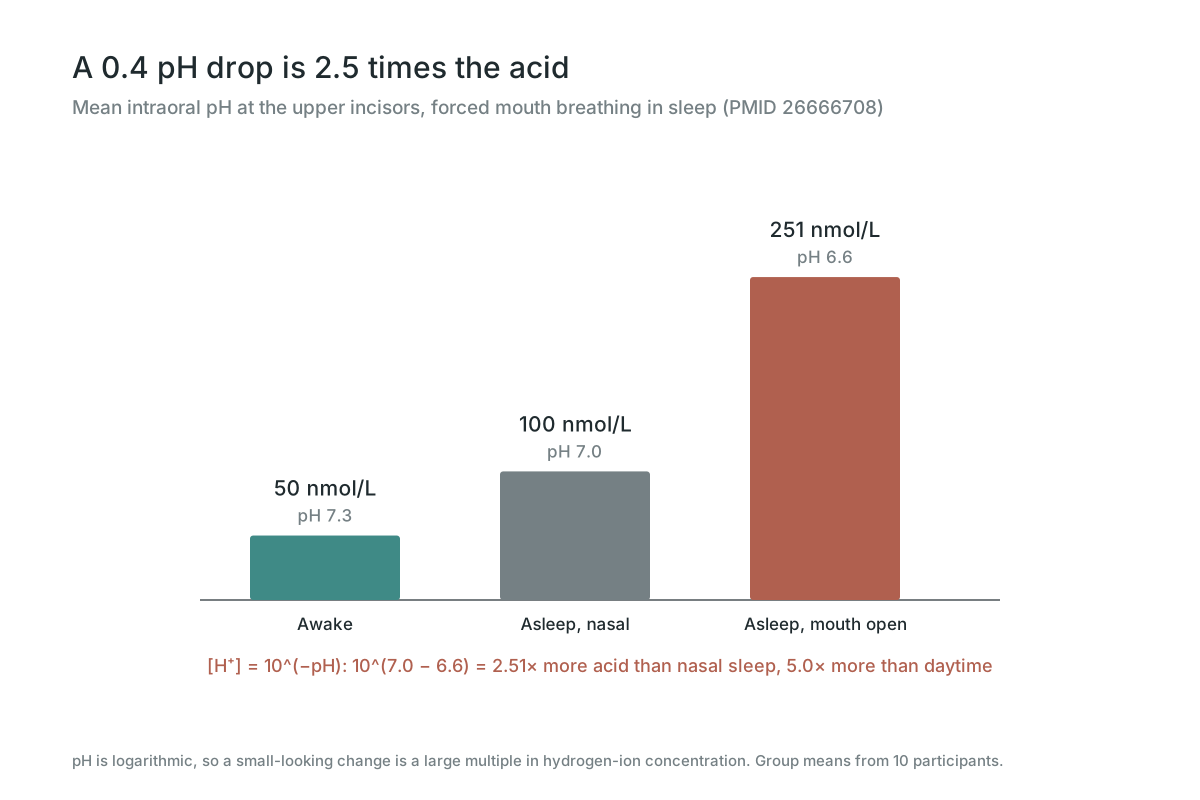
It also acidifies the mouth. With a nose clip forcing mouth breathing through the night, mean intraoral pH at the upper incisors fell to 6.6, against 7.0 in normal sleep and 7.3 during the day, and stayed low for longer (PMID 26666708). pH is logarithmic: [H⁺] = 10^(−pH), so 10^(7.0 − 6.6) = 2.51 times the hydrogen-ion concentration of nasal sleep and 10^(0.7) = 5.0 times the daytime level. The authors note that this has been proposed as a cause of erosion and caries.
The chemistry of why is the bicarbonate buffer in saliva, described by the Henderson-Hasselbalch equation, pH = 6.1 + log₁₀([HCO₃⁻] / (0.03 · PCO₂)). Airflow over an open mouth evaporates the saliva film, and less saliva on the teeth means less bicarbonate to hold the ratio up, so the pH drifts down through the night.
Mouth breathing vs nasal breathing, side by side
Each row is a measured difference from the studies above.
| Measure | Mouth breathing | Nasal breathing |
|---|---|---|
| Jaw position (SNA, SNB) | About 1.33° further back | Reference |
| Lower face | Longer, steeper mandibular plane | Shorter, flatter mandibular plane |
| Upper arch | Narrower at canines and molars | Wider |
| Posterior crossbite | More frequent | Less frequent |
| Head posture | Extended | Neutral |
| Airway resistance in sleep | 12.4 cmH₂O/L/s | 5.2 cmH₂O/L/s |
| Breathing events in sleep | 43 per hour | 1.5 per hour |
| Intraoral pH in sleep | 6.6 | 7.0 |
| Sinus nitric oxide to the lungs | Bypassed | Delivered |
What the evidence does and does not show
The animal experiments show that breathing mode can drive facial form; the human studies are mostly cross-sectional and show association. Tourne noted that human results have been more controversial than the animal ones and that individual responses vary (PMID 2202236), and the monkeys themselves varied considerably (PMID 6594052). The meta-analysis authors called for higher-quality studies. The sleep crossover had 12 participants and the pH study 10, both using a nose clip to force mouth breathing.
The geometry and pH conversions are exact mathematics applied to example dimensions and group means; they show scale, not an individual measurement.
Frequently Asked Questions
The facial pattern associated with long-term mouth breathing in childhood: lips apart at rest, a longer lower face, jaws set back, a steep lower jaw border and a narrow upper arch. It is also called long face syndrome or adenoid facies.