Chin projection is how far forward your chin sits relative to the lips, nose, and a named facial plane. On bone that point is pogonion. On the skin it is soft tissue pogonion. Close. Not the same. A chin that sits forward can straighten your profile and make the lower third look stronger. A chin that sits back makes the profile more convex. Same nose, same lips, they look bigger because the chin dropped out of the line. Projection is not size. Your chin can be tall or wide and still sit short of the lips.
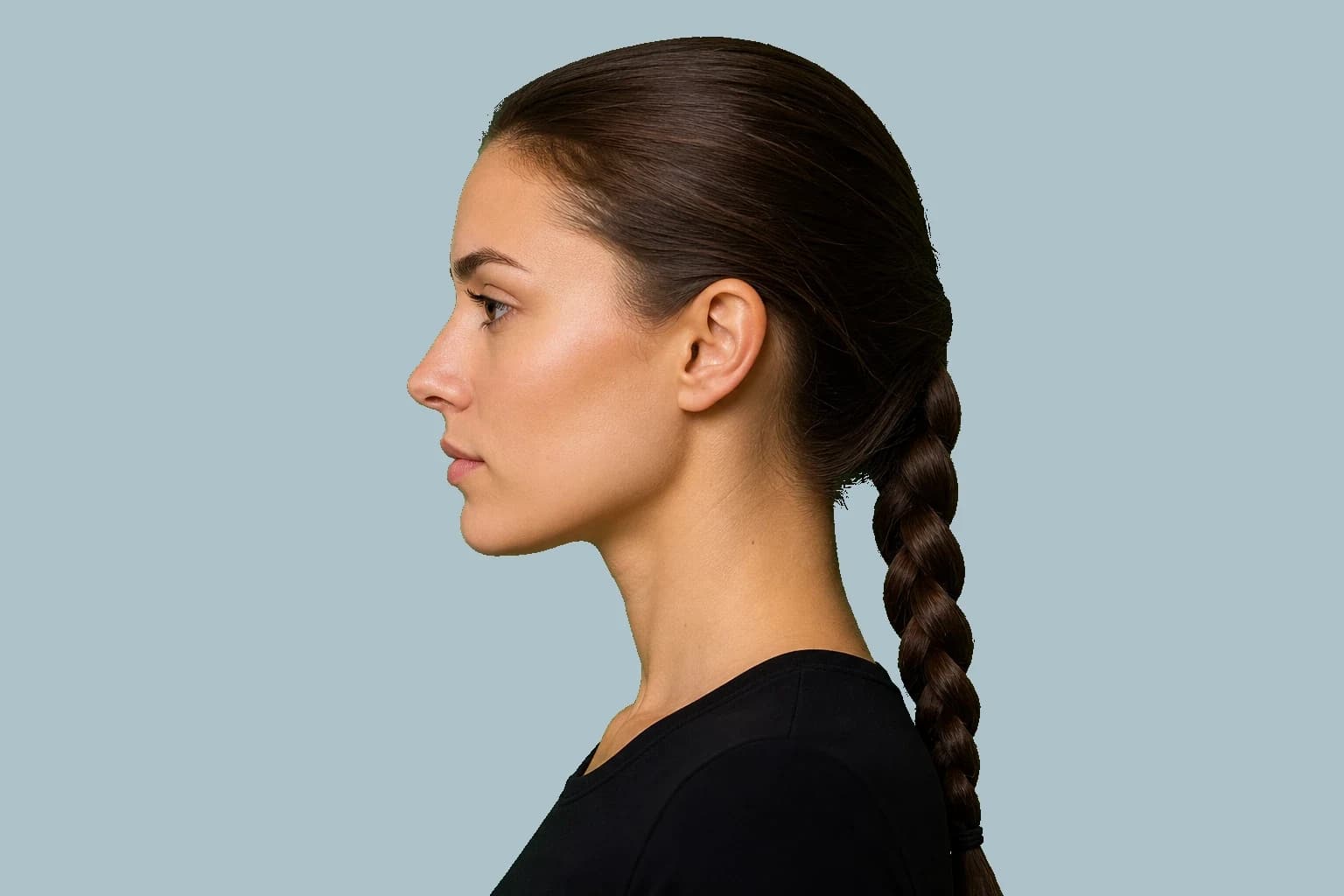
Landmarks
- PogonionPg
- The most anterior midline point of the bony chin.
- Soft tissue pogonionPg prime
- The most anterior midline point of the skin over the chin.
- MentonMe
- The lowest midline point of the chin.
- Chin projection
- Forward chin position relative to a specified facial plane or landmark.
- Facial convexity
- The profile bend connecting upper face, midface, and chin.
How is chin projection measured?
On a film you measure bony pogonion against a named cranial or facial plane. On the surface you measure soft tissue pogonion relative to subnasale, a true vertical, or a profile line. Different methods. Different questions.
Name the plane. A distance from pogonion to a vertical through subnasale is not the same number as an angle at the nasal tip or a line from the lips. Head posture also decides what vertical even means.
Write chin height and width separately. Projection is forward position. Height is vertical. Width is the span. One word for all three hides the shape.
Why chin projection changes the whole profile
A chin that sits back makes your profile more convex and puts the E line behind the lips. An average nose then looks more projected. A strong chin flattens the profile and the same nose looks smaller.
The lower lip to chin prominence angle was built to measure this relationship directly instead of inferring chin position from the whole profile (PMID 31331858). Combined measures still help. You still need the actual pogonion position.
How chin projection differs across faces
CT of the chin and mandibular symphysis found measurable sex differences in size and shape, plus a lot of individual variation (PMID 32545912). White celebrity faces showed dimorphic jawline and chin features, not one isolated male or female number (PMID 38231202).
A preference experiment found that preferred projection changes with sex and frontal facial type (PMID 28337420). That rules out one universal idealized chin position.
Why bone and visible chin can disagree
Skin, fat, mentalis muscle, and the labiomental fold sit over the symphysis. A thick pad can project past the bone. Mentalis tension can change the contour you see without moving skeletal pogonion.
If you care about structure, keep the film number and the surface number apart. If you care about appearance, the surface point is what you actually see.
How to photograph chin projection
True side profile. Lips relaxed. No chin strain. Head level. Neck neutral. Extending the neck or lifting the chin changes the lower face line you think you measured.
Camera back enough that the nose does not balloon. Forehead, nose, lips, and chin in frame so you can read projection against the rest of the face.
How Solar reads chin projection
Solar estimates soft tissue chin projection and reads it beside facial convexity, nasomental angle, lip position, labiomental angle, and lower face balance. The score has a balanced zone. More projection is not always better.
A photo cannot tell you the skeletal cause of retrusion. That needs examination and imaging.
Projection is position, not total chin size
Chin projection does a lot of the profile work. It is still one axis. Separate it from height, width, and soft tissue thickness.
Measure against a named plane. Standardize the side profile. Read pogonion with the nose and lips, not alone.
Read it against the rest of the measurements series. Trait context: what facial dimorphism is.
Frequently Asked Questions
How far forward pogonion sits relative to a named facial reference in side profile.
Next step
Want this measurement read across your own facial structure? Run the Solar facial analysis.