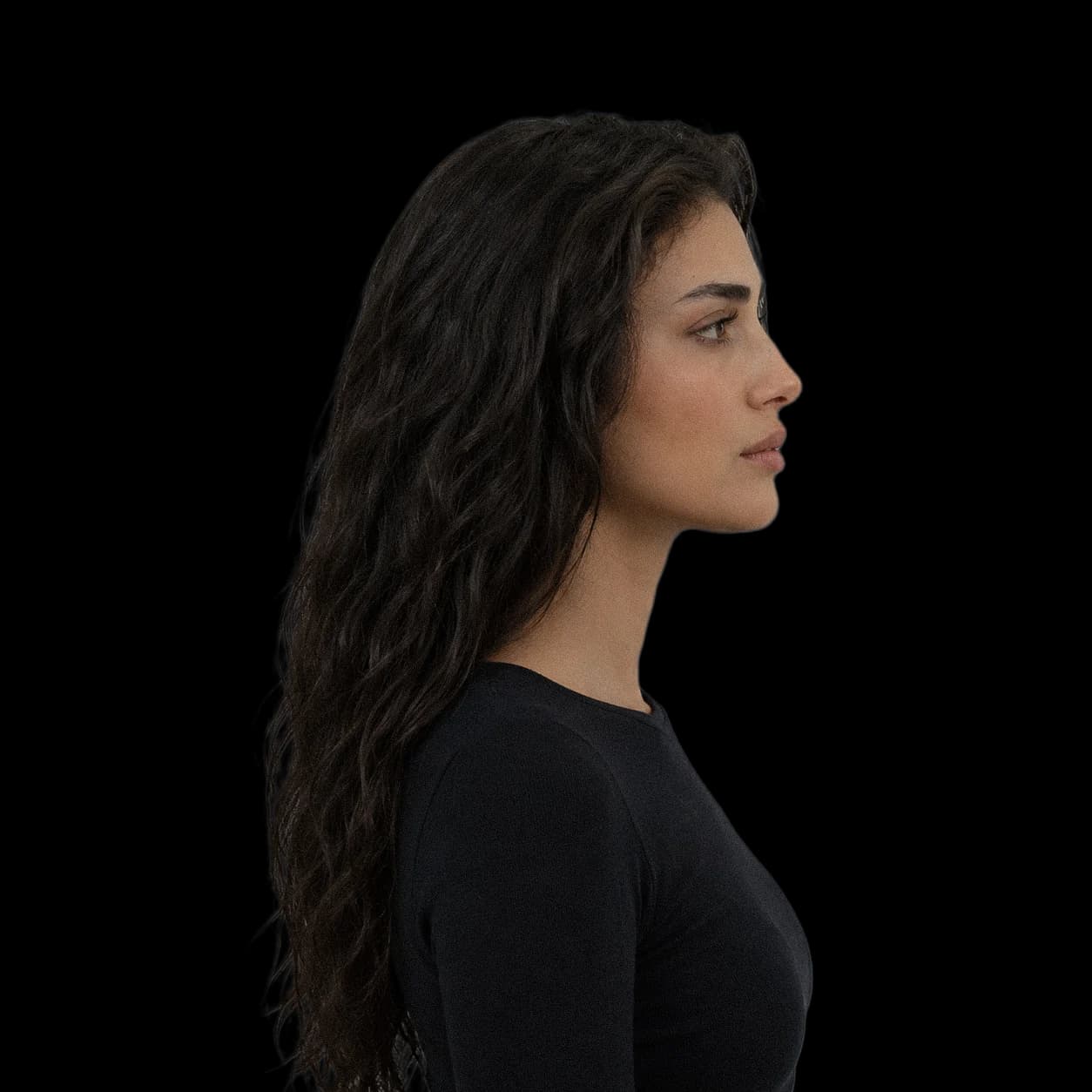
Eye aperture is the visible vertical opening between your upper and lower eyelid margins. In facial analysis you usually measure it through the pupil on a direct frontal image. It is not eyeball size. It is not upper eyelid exposure. A larger aperture can come from upper lid position, lower lid position, globe prominence, expression, or all four. Blinking, alertness, gaze, and camera pitch change the opening immediately. Capture quality matters as much as the number.
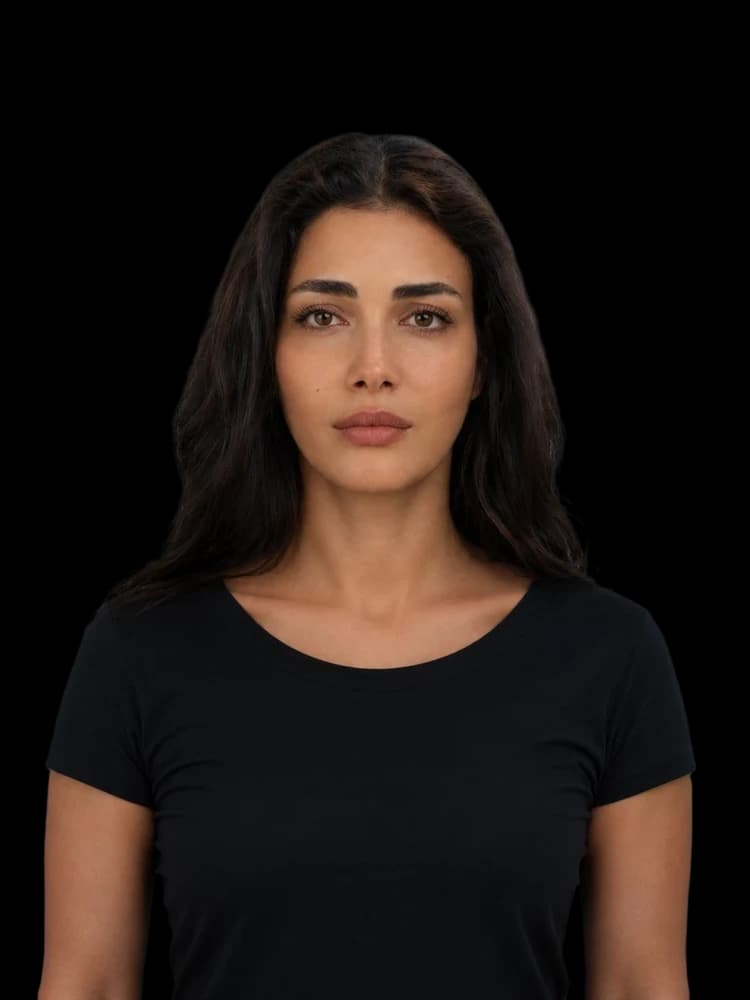
Landmarks
- Palpebral fissure height
- The vertical distance between the upper and lower eyelid margins at a specified horizontal position.
- Eye aperture
- The visible opening bounded by the upper and lower eyelids.
- Upper lid show
- Visible skin between the upper eyelid crease and upper lash line or lid margin.
- Margin reflex distanceMRD
- A clinical distance from the corneal light reflex to an upper or lower lid margin.
- Pupil center line
- The vertical line through the center of the pupil used for a repeatable aperture measurement.
How do you measure eye aperture?
On a standardized frontal photograph, mark the upper and lower eyelid margins on the vertical line through the pupil center. The distance between those two points is palpebral fissure height. Measure both eyes separately.
Aperture varies across the width of the eye. A central measurement does not describe the full contour. Area, medial height, lateral height, and lid curve give more when you need clinical precision.
Clinical margin reflex distances use a corneal light reflex as the reference. Do not swap them for a simple photograph ratio unless the capture method supports it.
What determines the opening you see?
Upper lid elevator function, lower lid position, canthal support, globe position, orbital volume, lid tension, and soft tissue all contribute. A large visible aperture does not prove a large globe.
Upper lid show is a separate feature. Two eyes can have the same aperture height and still differ in crease height and pretarsal exposure.
Why normal values are method specific
A Korean study of 498 people reported adult vertical fissure means of 8.0 millimetres in men and 8.2 millimetres in women (PMID 18349663). A South Indian photographic study reported 11.30 millimetres in men and 11.58 millimetres in women (PMID 23386941).
Do not rank these numbers against each other. Landmark placement, camera calibration, sample, age, and eyelid anatomy differ. Use a reference that matches the measurement protocol and the relevant population.
Why aperture changes from one photo to the next
Upper lid contour measurements in Korean adults decreased across multiple directions with advancing age, especially in temporal sectors (PMID 25357046). Three dimensional work in older patients also found age associations with fissure width, height, and visible ocular surface (PMID 37945760).
Fatigue, bright light, dry eye, blinking, surprise, squinting, and upward or downward gaze can exceed the structural difference you are studying. Take several neutral captures. Reject blink transitions.
Why you cannot isolate aperture from lid shape
In young East Asian women, a higher ratio of palpebral aperture height to upper lid show was associated with the more attractive eye group (PMID 35993880). The ratio mattered, not aperture alone, and the authors explicitly noted ethnic variability in aesthetic features.
A Chinese young adult study found that fissure index, canthal index, crease height, and exocanthion angle related to aesthetic ratings as a feature set (PMID 26395280). You need vertical and horizontal eye dimensions together.
How to photograph eye aperture
Use soft light, direct gaze, level head, neutral brows, and relaxed eyelids. Capture a short burst and pick a frame away from a blink. Do not open the eyes wide.
Pitch changes how much upper and lower lid is visible. Contact lenses, lashes, makeup, and heavy shadow can hide the true margin. Both pupils should face the camera with no vertical gaze deviation.
How Shastra reads eye aperture
Shastra estimates central aperture for each eye, scales it to fissure length, and compares left with right. It reads the result next to canthal tilt, intercanthal distance, lid exposure, and capture confidence.
Shastra does not reward the largest possible opening. A natural balanced zone keeps stare, lid retraction, or capture error from looking like a structural win.
Aperture is a state sensitive ratio
Vertical eye opening holds up when you measure it at a declared location in a neutral frame. It falls apart when expression and gaze are uncontrolled.
Use several captures. Compare both eyes. Scale height to length. Keep aperture separate from eyeball size and upper lid show.
Read it against the rest of the measurements series. Trait context: what facial dimorphism is.
Frequently Asked Questions
The visible vertical opening between your upper and lower eyelid margins.
Shastra
Explore your facial proportions
Upload a front and side photo to see these measurements on your own face.

- Symmetry
- fWHR
- Canthal tilt
- Facial thirds
- Gonial angle
- E-line
- Phi ratio