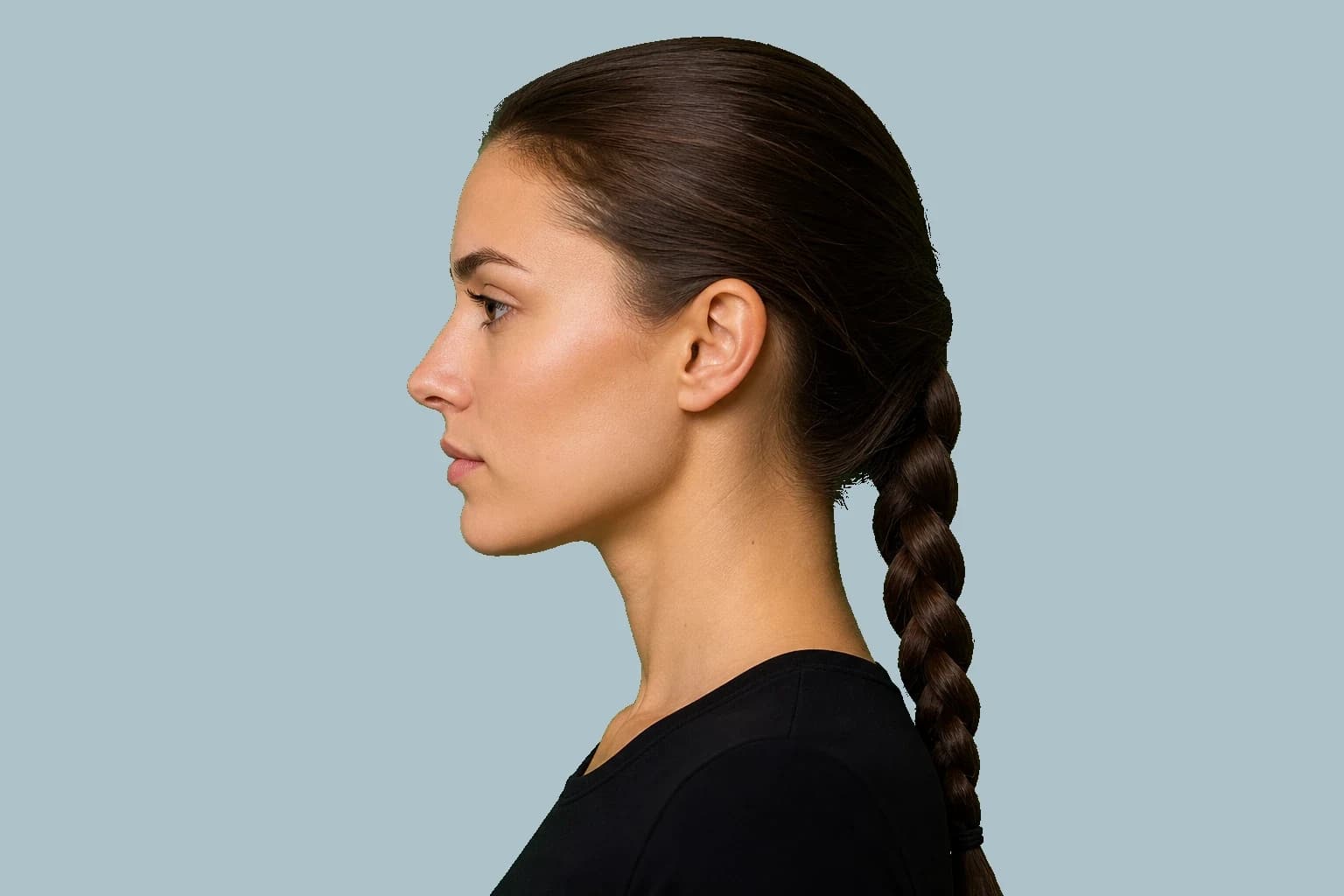
Jaw width in the literature is bigonial width: the straight-line span between the two gonion points, the bony corners where the mandible turns up toward the ear. That one distance decides whether the lower third reads as a soft oval or a hard square. It is one of the most sexually dimorphic widths on the human face, which is why a change in it shifts how masculine or feminine the lower face looks, even when the eyes and midface stay the same.
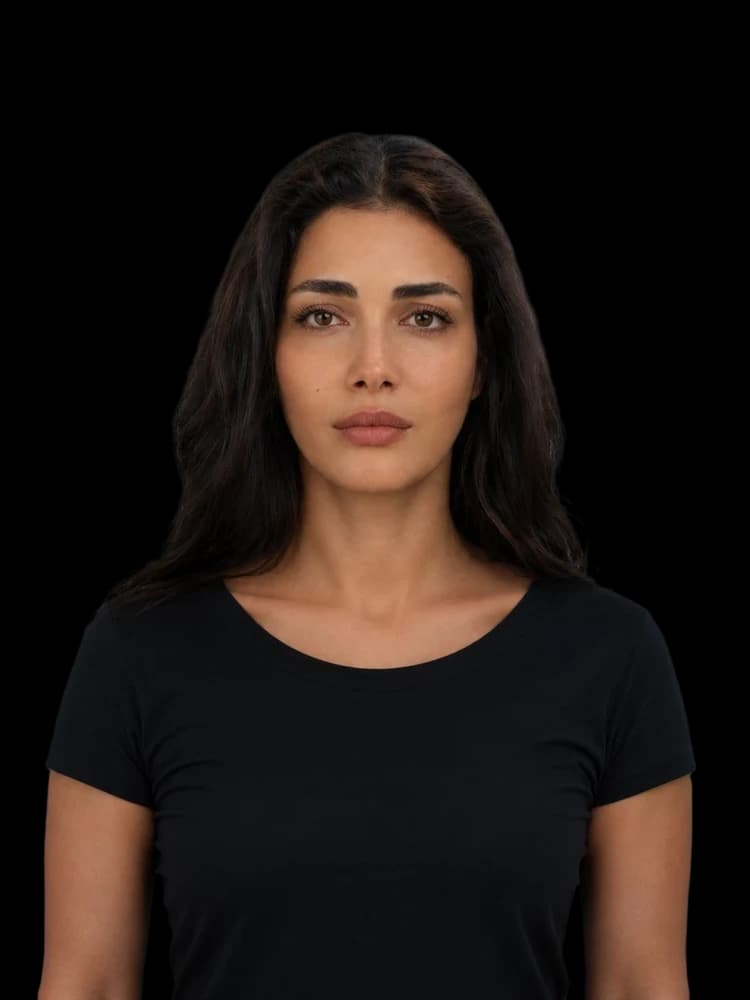
Landmarks
- Gonion (Go)
- The paired bony corners of the mandible, where the ramus turns into the body. Soft-tissue gonion is the skin point over that corner.
- Bigonial widthgo–go
- The straight-line distance between left and right gonion. This is jaw width in anthropometry and cephalometrics.
- Gonial angle
- The bend at each jaw corner, usually articulare–gonion–menton on a lateral film. Angle is not width.
- Bizygomatic widthzy–zy
- Cheekbone span. The midface width that jaw width is judged against.
- Periosteal apposition
- New cortical bone laid on the outer surface. The mechanism that increases cross-sectional diameter at the angles.
How is jaw width measured?
Jaw width is read head-on. You take the left gonion and the right gonion and measure the line between them. That line is go–go, the bigonial width (PMID 41303135). It is the widest part of the lower third, so it sets how square or how tapered the jaw looks from the front. A face can be wide at the angles and still taper into the chin. The measurement is the span, not the chin point.
Do not mix it up with the neighbors. The gonial angle is the bend at each corner, not the width across them. A sharp corner can sit on a narrow mandible. A blunt corner can sit on a wide one. Bizygomatic width (zy–zy) is the midface, the cheekbone span. Jaw width is judged against that upper width: the same bigonial number looks commanding under wide zygomas and heavy under a narrow midface. Mandible body length is a profile line, gonion forward to the chin. Different axis, different question.
Soft-tissue go–go on a front photo is not the same number as a panoramic tracing. Popa et al. measured bigonial width on orthopantomograms with AI-assisted landmarks and got a mean around 134.9 mm, slightly larger in males, and they warned that transverse OPG values are magnified. CBCT remains the cleaner bony read for width (PMID 41303135). Farkas-style anthropometry treats go–go as a living-face width that varies by sex and population, not one canon (PMID 16044298). Zhuang et al. mapped the same class of facial widths across sex, ethnicity, and age and showed the spread is real (PMID 20810561).
- Gonion (jaw angle). The paired corners. The line between them is the bigonial width.
- Gonial angle. A separate measurement: how sharp or obtuse each corner is.
- Width versus taper. A wide go–go can still V down to the chin. Always read it against zy–zy above it.
- Instrument. Front photo and calipers for soft tissue. CBCT for bony width. OPG overstates transverse spans (PMID 41303135).

Why does jaw width matter?
The lower face carries most of the sex signal. Androgen exposure during growth is part of why. In boys with delayed puberty, low-dose testosterone accelerated total mandibular length and ramus length toward normal facial dimensions (PMID 10327737). Cord-blood testosterone has also been tied to more masculinized postnatal facial shape (PMID 25768616), and SNPs that track testosterone biology show up in human facial morphology (PMID 30386331).
A wide, square jaw is a male-typical architecture. That does not make it a universal attractiveness cheat code. Large modern work finds averageness and other global cues predicting facial attractiveness more reliably than raw masculinity, and the popular “wide face” ratios get messy once facial fat is in the model. Bigonial width is a bone-and-masseter span. fWHR is a different ratio, usually bizygomatic width over upper-face height. People online treat them as the same lever. They are not. The honest read: jaw width changes how dominant and dimorphic the lower third looks. Whether that helps the whole face depends on the midface, the chin, the fat pad, and the population you are being judged in.
The cards below are working soft-tissue ranges, not targets. They describe where a lot of adult faces sit in front-photo and anthropometric practice. They are not a golden number, and they are not the 134 mm OPG mean, which is a different instrument.
100–115 mm
Men
95–105 mm
Women
95–115 mm
Typical range
Jaw width by demographic
Sex moves jaw width more than a single ethnicity label does. Male faces run wider at the angles on average. Female faces run narrower, with softer corners. Inside each sex the range is wide. Farkas’ international anthropometry is the reason a “perfect mm” is a bad goal: the same landmark set shifts across groups (PMID 16044298). Popa’s mandibular set still found males slightly wider at bigonial, without turning that into a significant sex split on OPG (PMID 41303135).
| Population | Jaw width tendency | Source |
|---|---|---|
| Men | Wider jaw, squarer corners, androgen-sensitive mandibular growth | PMID 10327737 |
| Women | Narrower lower face on average, softer corners | PMID 16044298 |
| Prenatal / genetic androgen signal | Higher early testosterone and testosterone-linked SNPs track more masculine facial shape | PMID 25768616, PMID 30386331 |
| Radiographic mandible | Bigonial width and gonial angle measured on the bone; OPG width is magnified versus CBCT | PMID 41303135 |
What the periosteum actually does
Width at the angles is mostly cortical geometry. Periosteal apposition lays new matrix on the outside of the mandible. That is how a bone gets a larger cross-section instead of just getting longer. Human osteoblasts, including cells taken from the mandible, express functional androgen receptors and respond to DHT (PMID 9383273). DHT binds AR without aromatizing to estrogen. That matters at the periosteum.
The periosteal papers are not subtle. Androgen-receptor signaling drives cortical expansion and periosteal bone formation. DHT and testosterone increased periosteal formation even in GH-receptor-deficient males. Breaking AR signaling cut the normal cortical widening of growth (PMID 17014385, PMID 15312246, PMID 25407961). At the pubertal dimorphic peak, males showed about 40% greater radial expansion and roughly 70% higher periosteal bone formation than females, with GH/IGF-1 following the same pattern (PMID 19888832). Male cortical widening still depends on androgen and estrogen-receptor biology together (PMID 16303833).
DHT → AR on osteoblasts → periosteal apposition → a wider external cortex. The cells still need the signal, the load, and the substrate in the same place.

Thyroid T3 and the cells that widen bone
T3 is just as important and massively overlooked. Bone and cartilage are genuine T3 target tissues. Circulating T4 has to reach skeletal cells and be converted locally through DIO2 into active T3. DIO3 opposes that by inactivating thyroid hormone. T3 enters through transporters such as MCT8/SLC16A2 and MCT10/SLC16A10, binds predominantly TRα1/THRA in the skeleton, and changes programs that run chondrocyte maturation and osteoblast differentiation. That feeds RUNX2, SP7/Osterix, SOX9, COL2A1, ACAN, IHH/PTHrP, COL10A1, MMP13, VEGFA, ALPL, osteocalcin, and matrix mineralization. T3 also changes mitochondrial oxidative metabolism, which is whether an osteoblast has the ATP to make collagen and mineralize it. The skeleton is described as an exquisitely sensitive T3 target for a reason (PMID 26862888, PMID 24783033).
T3 deficiency during development changes skeletal maturation, growth-plate physiology, and bone turnover. Chronically excessive thyroid hormone accelerates remodeling and can turn catabolic. The literature supports strong physiological T3 signaling, not a race to force T3 as high as possible. More of the thyroid-skeletal map sits in the research library.
Progesterone and male osteoblasts
Progesterone matters in males too. Human osteoblasts express progesterone receptor isoforms PR-A and PR-B. Progesterone increased human osteoblastic proliferation and increased IGF-2 production in vitro (PMID 9632845, PMID 1375800). PR biology is sex- and stage-dependent. A mouse conditional-knockout found that PR signaling in early mesenchymal and osteoprogenitor populations changed trabecular acquisition, with a particularly strong effect on male osteogenic potential, while deleting PR later in mature osteoblasts did something different (PMID 28569405). Another culture system saw progesterone push osteoprogenitors in adult female-derived cells and not in the male-derived cells used in that model (PMID 8988343).
The receptor is real in male bone. Outcome depends on lineage, androgen/estrogen context, and differentiation stage. Progesterone sits in male skeletal endocrinology the same way. Dose and stage decide the result.
Suture traction, cyclic strain, and the masseter
Hormones write the anabolic instruction. Strain tells the cells where to put matrix. Mandibular periosteum and the sutures around the midface read load through integrins, FAK/Src, PIEZO channels, Ca²⁺, ERK, RhoA/ROCK, and YAP/TAZ, then the same osteogenic transcription factors, RUNX2 and SP7. PMID 34208464 is the PIEZO review for bone. That is why a wide jaw is not only a hormone story and not only a chewing story.
Suture Traction Therapy is already in the clinical literature as a structured cranial-suture protocol for facial asymmetry (PMID 35888588). Organized manual traction on facial sutures is a published method. The sutures that sit next to mandibular width are the ones that frame the midface against the jaw: zygomaticomaxillary and the circummaxillary complex. If those relationships are off, bigonial width is judged against a crooked or retrusive upper frame.
Sutural mechanobiology is more specific than “pull on bone.” In growing rabbits, cyclic loading at the same peak force grew sutures harder than a static hold (PMID 12619937). Brief high-frequency cyclic tension or compression changed suture width, cell density, and osteoblast-occupied surface (PMID 18032124). Small oscillatory strain doses accelerated sutural growth (PMID 12454093). Those are animal suture studies. They still show the variable that matters: waveform and direction, not maximum effort. Palatal traction work that uses that literature is covered in what thumbpulling is.
Masseter size can add apparent width on top of bone. Heavy clench and hypertrophy make the angles look thicker in photos. They do not move go–go on a CBCT the way periosteal apposition does. Chewing load still matters because the mandible is under daily strain through the condyle, ramus, and periosteum. The hormone and load side is in how to improve facial dimorphism.
What the food papers actually measured
Matrix work needs substrate. Raw milk carries lactoferrin, which increased osteoblast proliferation, differentiation, and local bone formation in experimental work (PMID 15166119), and myo-inositol, which increased mandibular length and condylar-cartilage thickness in growing rats and rabbits without a matching femoral-length bump (PMID 30682567, PMID 38534273). Zinc sufficiency is required for normal testosterone physiology (PMID 8875519).
Adult periosteal apposition is real and slow
Most of the dimorphic widening happens in adolescence. Adult periosteal apposition does not fall to zero. Tetracycline labeling in human ribs shows periosteal formation after age 20 and into the seventh decade, at a declining rate (PMID 5917324). Longitudinal skeletal work documents continuing adult periosteal apposition (PMID 2399958). The rate is slower than puberty. Visible week-to-week change in a photo is more often fat, water, beard, camera lens, or masseter tone than a new millimeter of cortex.
What is shown, and what is not
Jaw width is go–go. A square lower third is that span plus the corner angle plus the masseter on top of it. The papers line up on DHT/AR on mandibular osteoblasts, periosteal apposition as the widening mechanism, T3 as a skeletal requirement, progesterone-receptor biology in males, suture traction as a published method, and cyclic strain beating static strain in the sutural niche. How to actually train it: how to improve facial dimorphism and the atlas. Trait definition: what facial dimorphism is.
Frequently Asked Questions
Jaw width is bigonial width: the straight-line distance between the left and right gonion, the bony corners of the mandible. It is read from the front and sets how square or tapered the lower third looks.
Shastra
Explore your facial proportions
Upload a front and side photo to see these measurements on your own face.

- Symmetry
- fWHR
- Canthal tilt
- Facial thirds
- Gonial angle
- E-line
- Phi ratio