The nasolabial angle is the angle between the columella beneath the nose and the upper-lip contour. To measure it, find subnasale, where the columella meets the upper lip, on a true side-profile image with relaxed lips. Trace the columellar and upper-lip tangents and measure the included angle. Both sides contribute, so the total value alone cannot tell you whether nasal rotation or lip position produced it.
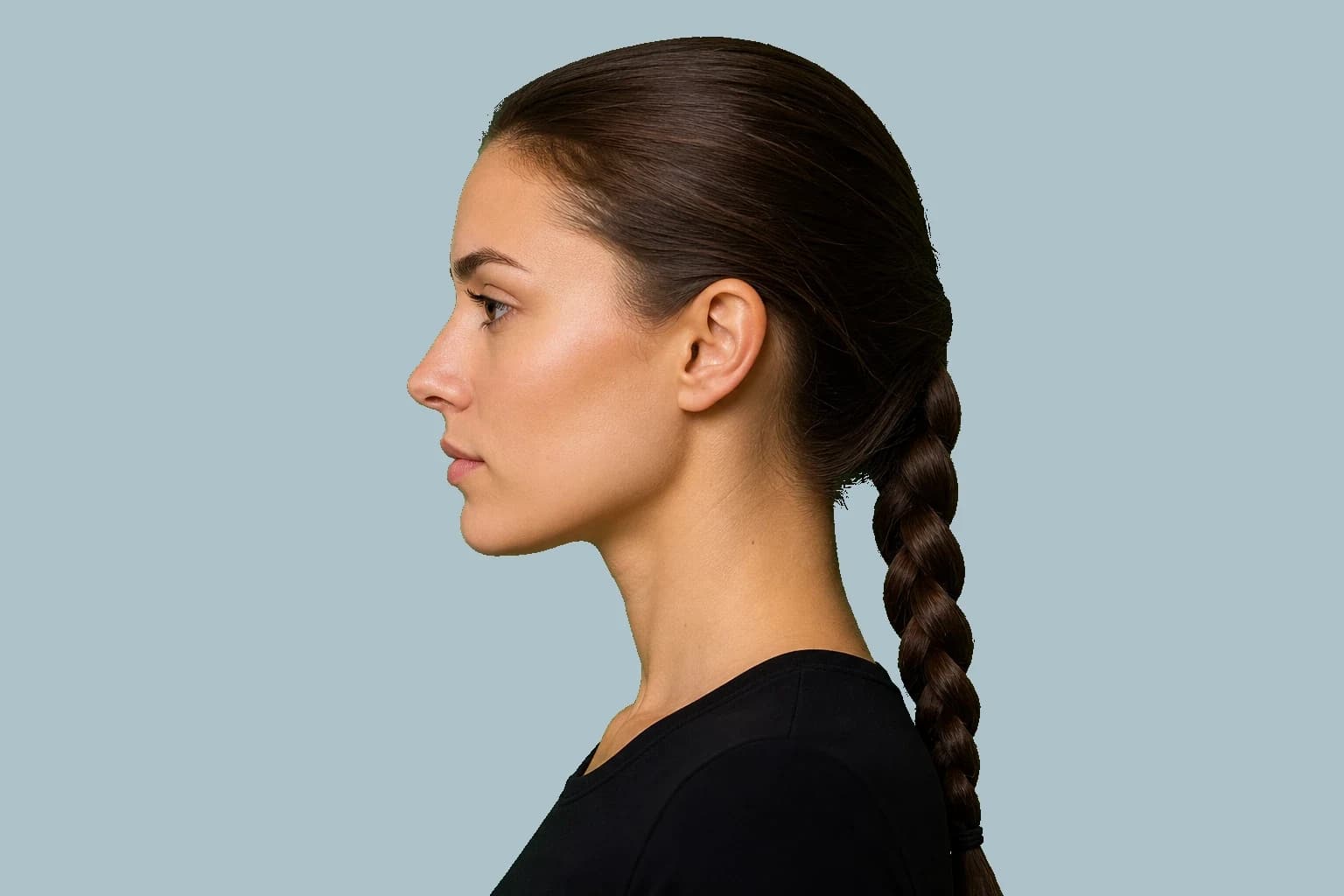
Landmarks
- SubnasaleSn
- The point where the lower nasal septum and columella meet the upper lip in the midline.
- Columella
- The soft tissue column between the nostrils, visible beneath the nasal tip.
- Labrale superiusLs
- The most anterior point of the upper lip vermilion in profile.
- Tip rotation
- The upward or downward orientation of the nasal tip relative to the face.
- Philtrum
- The vertical groove and tissue segment between subnasale and the upper lip.
How is the nasolabial angle measured?
Use a true side-profile image with the upper lip at rest. Locate subnasale where the columella meets the upper lip. Draw the columellar tangent and the upper-lip tangent, then measure the included angle.
Write down the exact segments you traced. A line through two lip landmarks is not always identical to a tangent along a curved upper lip. Keep one construction for follow-up comparisons.
Record the two components as well as the combined value when possible. The same total angle can result from different combinations of nasal rotation and lip inclination.
What counts as an open or closed nasolabial angle?
An opening or closing of the angle is a description of those two segments. It does not establish nasal-tip rotation alone, and it does not diagnose protruding teeth.
An experiment altered the nasal tip and upper lip in photographs of one Chinese woman, with ratings from 33 orthodontists and 64 non-professionals. Lip inclination influenced the judgments, illustrating why the components must be considered separately (PMID 26688942).
A review of lower-face anthropometry emphasized that results from different measurement methods are not interchangeable. Its pooled reference data should not be turned into an individual treatment target (PMID 38467850).
About 90° to 110°
Broad descriptive adult band
Two structures
Nose and upper lip form the angle
Method sensitive
Tangent choice changes the number
How much does the angle affect attractiveness?
One perception study used photographs of 18 adults rated by 90 observers from several groups. The facial features associated with ratings differed by malocclusion group and evaluator background (PMID 36031510).
Another study rated 100 profile silhouettes and compared the 30 selected as attractive with reference values. Such selection describes the observers and profiles studied, rather than proving one angle causes attractiveness (PMID 36823034).
Why teeth and jaws can change the angle
A study of 75 Class II orthodontic patients compared treatment with different extraction patterns and measured changes in lips and the facial profile. It cannot predict an individual lip response from one pre-treatment photograph (PMID 35461792).
A lip-tangent change may reflect posture, soft tissue or dental support. Keep a measured surface change separate from an explanation about the teeth or jaws.
How expression and head position distort it
Relax the lips rather than pursing them, smiling or pulling the upper lip downward. If lip closure requires effort, document the resting posture and avoid manufacturing a different contour for the photograph.
Repeat the side orientation, camera distance and light. Mark the columella from the contour rather than the edge of a shadow beneath the nose.
How Shastra reads the nasolabial angle
Shastra estimates profile geometry from visible landmarks. Read the angle with the marked lip and nasal segments rather than treating the output as a standalone verdict.
The nasal-tip projection guide and Ricketts E-line guide explain measurements that help separate nasal and lip relationships.
The angle belongs to both nose and lip
A useful report identifies the columellar side, the lip side and the total angle. That is what makes an observed difference interpretable.
Compare the nasofrontal angle for the upper nose and visit the measurement directory for the full series.
Frequently Asked Questions
The profile angle at subnasale between the columella beneath the nose and the upper lip.
Shastra
Explore your facial proportions
Upload a front and side photo to see these measurements on your own face.

- Symmetry
- fWHR
- Canthal tilt
- Facial thirds
- Gonial angle
- E-line
- Phi ratio